On Patience
On the temperament required to build a collection worth keeping
There is a version of coin collecting that can be completed quickly. You identify the coins you want. You find them at their catalogue value, or close to it. You buy them. You are done. The collection is technically complete. Every slot is filled.
And then there is the other version — the one that takes years, that requires waiting for the right grade at the right price from the right source, that sometimes means leaving a gap in the collection for months or years rather than filling it with an example that is merely acceptable. This version is harder. It is also the one that produces something worth the name.
The Gap in the Case
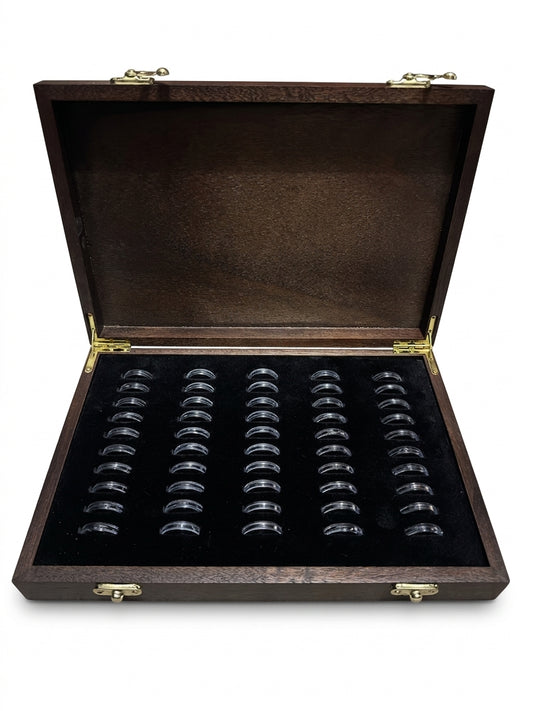
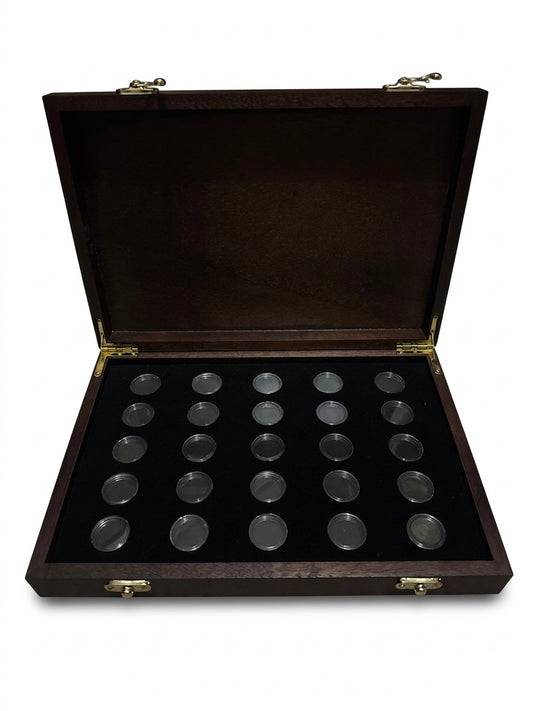
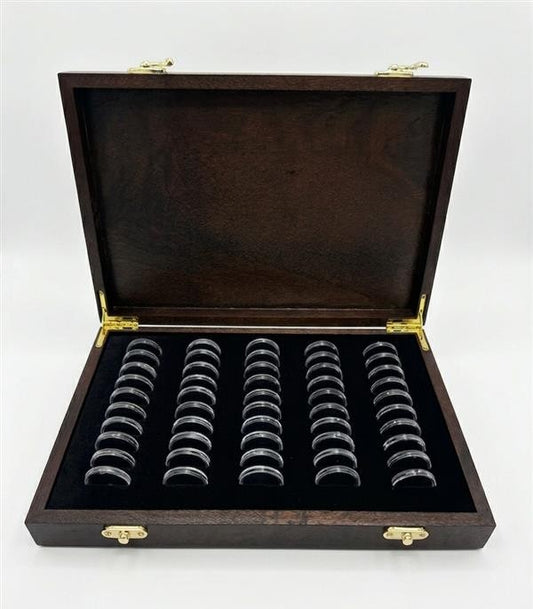
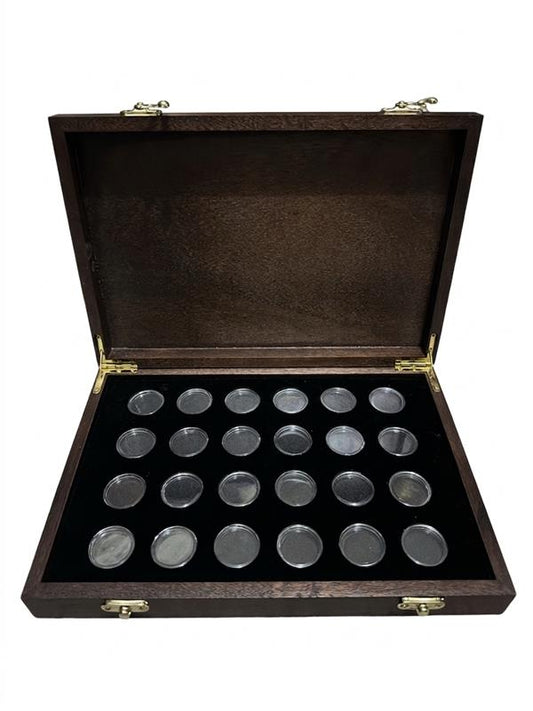
An empty recess in a Thomas Anne case is not a failure. It is a statement of intent. It says: I know what belongs here. I have not found it yet, or not found it at the standard I require, and I am willing to wait. The gap is the most honest part of a collection that is still being built — more honest than a coin placed there to fill the space rather than because it deserved to be there.
The serious collector learns to live with gaps. More than that — they learn to value them. The gap in the 1930 penny slot, or the 1966 round fifty cent slot, is a record of the standard being held. Every day that slot remains empty is a day the collector refused to settle. That is a form of discipline that most pursuits do not require, and it produces a different relationship to the collection than the one built by filling slots indiscriminately.
When the coin finally arrives — when the example that meets the standard is found, acquired, and placed in the recess that has been waiting for it — the satisfaction is specific to the waiting. A coin placed immediately does not feel the same as a coin that was sought.
"The empty recess is not a failure. It is a standard being held. Every serious collection has them — and every serious collector knows the difference between the ones they are still filling and the ones they simply gave up on."
Thomas Anne CollectiblesPatience as Discernment
Patience in collecting is not passive. It is not simply waiting — it is the active maintenance of a standard in the face of the temptation to lower it. It requires knowing precisely what you are looking for, being able to assess what you find against that standard, and having the willingness to decline when the assessment falls short.
This is a skill that develops with experience. The beginning collector often cannot see the difference between Fine and Very Fine, between a cleaned coin and one with original surfaces, between a strike that is well-centred and one that is slightly off. These distinctions become visible — and then they become indelible. Once you can see the difference, you cannot unsee it. And once you cannot unsee it, settling becomes impossible.
This is what experienced collectors mean when they say a collection reflects its collector. It does not simply mean that the coins are the ones the collector chose. It means the collection reflects the standard the collector held, the patience they maintained, and the willingness to keep a gap open rather than fill it with something lesser.
The Collection as a Record of Time
A collection built with patience is a record of time in a way that a collection assembled quickly is not. Each coin arrived when it was ready to arrive — when the collector was ready, when the right example appeared, when the standard was met. The collection is the accumulation of those moments. That is what makes it worth keeping properly. And that is what a Thomas Anne case is for. When the collection is finally complete, what comes next is a question worth sitting with.
Handcrafted timber display cases built for the Australian decimal series — protecting your collection while keeping every coin visible.
Browse The Collection