The 1930 Australian Penny
The King of Australian Coins — its story, its rarity, and what it means to own one
There is one coin in Australian numismatics that stands apart from all others. Not for its gold content, not for its age, not even for its design — but for the extraordinary circumstances of its creation, and the national obsession it has generated for more than eighty years.
The 1930 Australian penny is the King of Australian Coins. It holds the record as the most valuable copper penny in the world. And the remarkable thing is that it was never supposed to exist at all.
Born of the Great Depression
The year 1930 brought the full weight of the Great Depression to Australia. Unemployment reached 30 per cent. Banks failed. Families were broken apart by the search for work. And at the Melbourne Mint, the demand for new coinage had collapsed so severely that production of the penny — Australia's most common coin — was suspended entirely.
No shillings or florins were struck that year. No official pennies were ordered by the Commonwealth. The Mint, working with drastically reduced staff and minimal materials, had little to do but maintain its dies and wait for better times.
Yet something happened. The exact circumstances remain debated among numismatists to this day — but the evidence, pieced together over decades of research, suggests that a small number of pennies were struck to test the 1930-dated dies. Around 3,000 examples were produced, stored with the remaining stock of 1929 pennies, and quietly dispatched with a later Commonwealth order in 1931 or 1932. They entered circulation without fanfare, without records, and without anyone understanding what they were.
The Discovery — A Nation Checks Its Change
It was not until the early 1940s that Sydney coin collector Fritz Schaefer became aware of the 1930 penny's existence. The news spread gradually through the numismatic community — and then, as dealers began offering ten shillings for any example brought forward, it escaped into the general public consciousness entirely.
Newspapers published the story. Radio programs discussed it. Australians across the country began emptying their change purses, checking the dates on every penny they could find. The 1930 penny became a national conversation — the rare coin hiding in plain sight, worth a small fortune to whoever had the luck to find one.
By the 1960s, as decimalisation approached and the pre-decimal series was drawing to a close, the 1930 penny had become something more than a collector's target. It had become a symbol — of the Depression, of resilience, of the extraordinary things that can happen when economics and history collide in a minting room. It remains, by every measure, Australia's most famous coin.
"To own one is not just to acquire a piece of currency, but to become a custodian of a remarkable legacy."
Yen Gao — Numismatist, JaggardsThe Design — Diamonds and Pearls
The 1930 penny carries the same design as all George V era Australian pennies. The obverse — designed by Melbourne-born sculptor Sir Edgar Bertram Mackennal, the first Australian artist to be knighted — portrays King George V wearing the Imperial State Crown. The Crown's band features representations of precious stones: an area collectors and dealers refer to simply as the diamonds and pearls.
These raised design elements are the first to show wear on a circulated coin — and because all 1930 pennies circulated, the condition of the diamonds and pearls is the primary indicator of grade for every known example.
Central diamond visible but worn. Some pearls distinguishable. The most commonly encountered grade. Value from $17,000–$25,000.
Six clear pearls visible. Central diamond strong. Light oxidation may be present. Value from $25,000–$45,000.
Full diamond and most pearls clearly defined. Exceptionally rare at this grade. Value from $65,000–$150,000.
Complete central diamond and all eight pearls visible. Perhaps 40–50 known. Value from $65,000 to $400,000+.
There are also two known obverse varieties — the London obverse and the Indian obverse — distinguished by subtle differences in the portrait. Both are genuinely rare. The London obverse variety is considered marginally scarcer of the two.
The Six Proof Pennies
Above the circulation strikes, in a category entirely their own, sit six specially prepared proof examples struck at the Melbourne Mint in 1930. These were not intended for general use. Three were sent to the National Gallery of Victoria — later transferred to Museums Victoria — and three to the Art Gallery of South Australia. The British Museum received examples as well.
Two of the institutional proofs were eventually released by the museums that received them and entered private hands. These coins — struck on polished dies with mirror-like fields and exceptional detail — represent the absolute pinnacle of Australian numismatics.
At auction, the finest known proof example sold in 2024 for $750,000 AUD — setting a record as the most valuable Australian coin ever sold. It is unlikely to be surpassed.
Buying a 1930 Penny — What You Need to Know
The 1930 penny's fame has made it a consistent target for counterfeiters. A common method involves altering the date on a 1920 or 1936 penny — a forgery detectable under magnification but easily missed by the untrained eye. Before purchasing, several precautions are worth taking.
Buy from reputable dealers. Members of the Australasian Numismatic Dealers Association (ANDA) are bound by a strict code of conduct and carry the weight of professional reputation. Established dealers such as Downies, Coinworks, and Jaggards have handled hundreds of 1930 pennies over many decades.
Consider third-party grading. A 1930 penny certified by PCGS or NGC carries an independently verified grade and authenticity certificate — and commands a premium in the secondary market that typically exceeds the cost of grading.
Do not clean it. A cleaned 1930 penny loses significant value immediately and permanently. The coin's natural patina is part of its character and its grade. Leave it exactly as you find it.
Buy to your budget. The advice from experienced dealers is consistent: acquire the best example your budget allows, and trade up as your means permit. A Fine example today is better than waiting indefinitely for a Very Fine that may never come within reach.
What the 1930 Penny Really Means
The 1930 penny's value is not purely numismatic. It carries the weight of a particular moment in Australian history — the Depression years, the struggle, the quiet stoicism of a nation getting through. The coin was born of hardship and survived to become a symbol of something enduring. For context on where it sits among key dates in Australian coinage, see our collector's guide.
Collectors acquire a 1930 penny for many reasons. Some are driven by the thrill of owning Australia's most famous coin. Some see it as a family heirloom — something to hold, to pass on, to explain to children and grandchildren. Some view it as an investment, and history supports that view: the coin has consistently appreciated over decades.
What unites every owner is the experience of holding it. A brown copper penny, worn with age, carrying a date that almost wasn't there. The weight of what it represents — a minting room during the Depression, an accidental release, eighty years of discovery and wonder — concentrated into something that fits in the palm of your hand.
A coin not meant to be struck. A rarity not meant to survive. A legend that has captivated this country for the better part of a century. The 1930 penny is not just a coin. It is a piece of Australia.
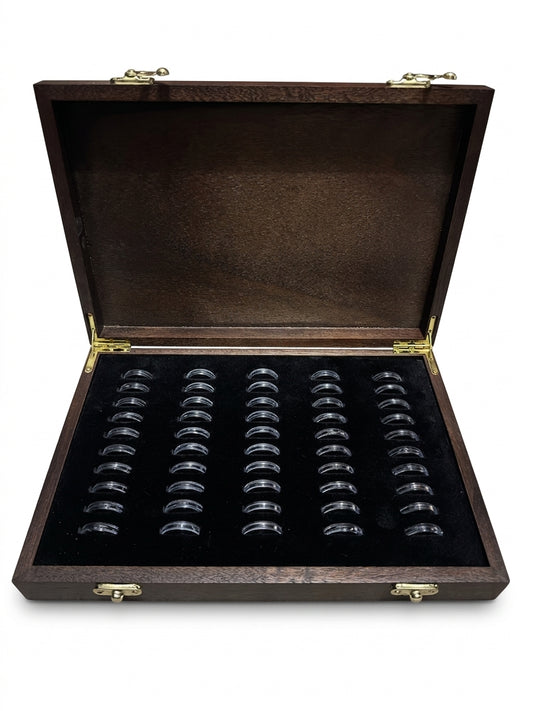
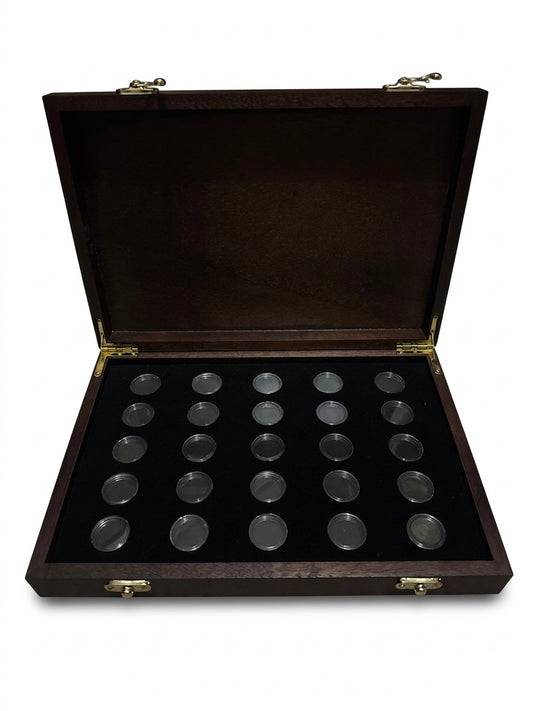
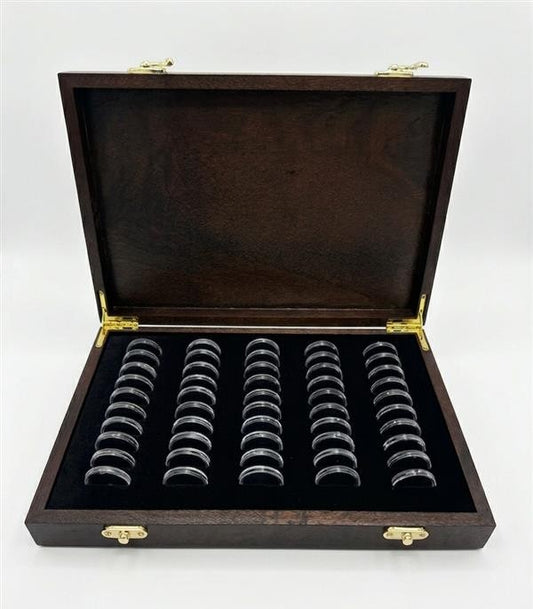
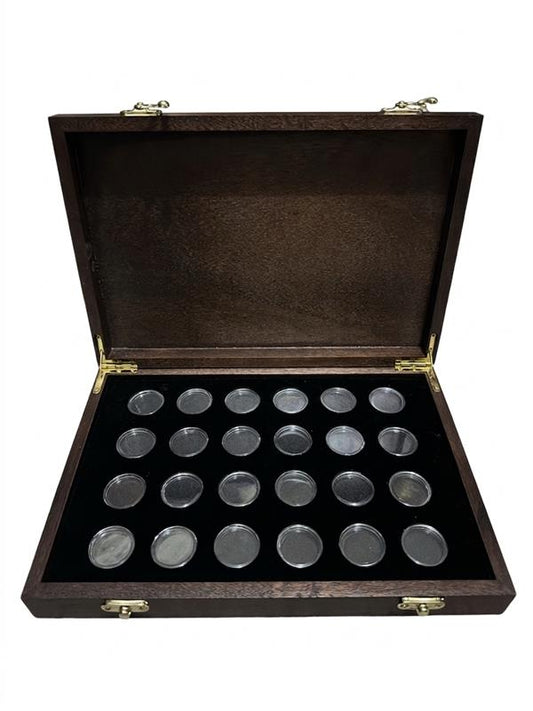
A coin of this significance deserves a home worthy of its history. Thomas Anne handcrafted mahogany display cases are built for collectors who understand that preservation is not storage — it is continuity.
Explore our range of Australian pre-decimal and decimal display cases.
Browse The Collection