Key Dates in Australian Decimal Coinage
A collector's guide to the coins worth knowing — and why they matter
Australia's decimal coinage series, introduced on 14 February 1966, spans nearly six decades of minting history. Within that history sit a handful of coins that every serious collector should know — dates and varieties that command attention not just for their monetary value, but for the stories behind them.
This guide covers the key dates in Australian decimal coinage: what makes them significant, what to look for, and what they're worth to collectors today.
What Makes a Coin a "Key Date"?
A key date is a coin within a series that stands apart from its peers due to low mintage, a minting error or variety, a unique composition, or an unusual circumstance of production. Key dates are the coins that complete a set — and often the ones that define a collection.
In Australian decimal coinage, key dates fall into three broad categories: low mintage circulation issues, significant varieties and errors, and coins withdrawn from circulation due to their material value exceeding face value.
The 1966 Round Fifty Cent — Australia's Silver Farewell
No list of Australian decimal key dates begins anywhere other than the 1966 round fifty cent. Struck in 80% silver and 20% copper, it was the only circulating Australian decimal coin ever made in precious metal — and it lasted barely three years.
By 1969, rising silver prices meant the bullion value of the coin exceeded its fifty cent face value. The round fifty cent was withdrawn from circulation and replaced by the familiar dodecagonal design that Australians know today. Millions were melted down or hoarded, making genuinely uncirculated examples increasingly scarce.
For collectors, the 1966 round fifty cent is essential. It is the foundation of any serious Australian decimal collection — the coin that introduced the series and the one most immediately withdrawn from it. In good uncirculated condition, examples regularly achieve $30 to $60 at auction, with premium specimens commanding significantly more.
The 1966 Wavy Baseline Twenty Cent — A Tale of Two Mints
When Australia decimalised in 1966, coins were struck at multiple mints: the Royal Australian Mint in Canberra, the Melbourne Mint, and the Royal Mint in London. The London-struck twenty cent coins carry a subtle but important die variation: the upper part of the numeral "2" in the date appears wavy or curved, rather than the straight, sharp stroke found on domestically struck examples.
This difference — visible under magnification — results from different dies used at the London facility. Because of its status as one of the first varieties in the decimal series, and its rarity relative to the standard issue, the 1966 wavy baseline twenty cent has become one of the most sought-after decimal varieties among Australian collectors.
Mintage estimates range between 1,500 and 3,000 examples. Even in circulated grades, examples command significant premiums over standard 1966 twenty cent coins.
The 1968 One Cent — The Lowest Mintage in the Series
Stuart Devlin's feathertail glider one cent is among the most elegant designs in Australian decimal coinage. The 1968 example carries additional significance: it represents the lowest mintage year in the entire one cent series.
Compounding its rarity, the Royal Australian Mint did not release a mint set in 1968, meaning there are no uncirculated examples from official collector sets. Almost all surviving 1968 one cent coins passed through circulation, making high-grade examples extraordinarily difficult to locate.
For collectors working through a complete date run of the one cent series, the 1968 is the coin that requires the most patience and the deepest pocket.
The 1972 Five Cent — A Quietly Significant Date
The 1972 five cent is not as celebrated as some of the coins on this list, but it is a quietly important key date for collectors building a complete run of the five cent series. Its mintage is notably lower than surrounding years, and uncirculated examples are genuinely scarce.
The five cent's echidna reverse — another Stuart Devlin design — has remained essentially unchanged since 1966, making a complete date run one of the more achievable long-term collecting projects. The 1972 is the date that separates a good run from a great one.
The 1981 Two Cent — The Missing Initials
In 1981, a batch of two cent coins was struck without the designer's initials "SD" — Stuart Devlin's mark, which normally appears behind the front feet of the frilled-neck lizard on the reverse. The omission is subtle. Without knowing to look for it, most people would pass a 1981 No SD two cent without a second glance.
Similar anomalies were observed on 1967 and 1968 coins, suggesting an occasional pattern of die preparation oversight. The 1981 No SD is the most collected of these varieties — a coin that rewards careful examination and rewards collectors who know exactly what they're holding.
The Ten Cent Key Dates — 1985, 1991, 1997 and 2011
Stuart Devlin's superb lyrebird ten cent is one of Australia's most enduring coin designs — essentially unchanged since 1966. For most collectors, the ten cent series appears uniform and unexciting. Those who look more carefully discover four dates that stand well apart from the rest.
Mintage of just 2 million. Also the year the obverse portrait changed from Machin's second portrait to Maklouf's third — making every 1985 ten cent a transitional coin.
Mintage of 4.8 million. Looks identical to any other third-portrait ten cent — which is precisely what makes it so easy to overlook and so rewarding to find.
Mintage of 5.7 million — but the Royal Australian Mint unexpectedly closed the annual Mint Set at an unusually low run, creating an artificial scarcity of uncirculated examples the market has never corrected.
The lowest mintage in the entire ten cent series — just 1.7 million struck. Finding one in high grade requires considerable patience.
The 2000 One Dollar / Ten Cent Mule — A Modern Rarity
The 2000 $1/10c mule — created when a one dollar reverse die was paired with a ten cent obverse die — is one of Australia's most celebrated modern rarities. The error was not discovered until coins had already entered circulation, meaning an unknown number reached the public before the mistake was identified.
The mule is significantly larger than a ten cent coin but carries the ten cent obverse portrait of Elizabeth II. The discrepancy is immediately obvious to anyone examining it closely. Examples in circulated condition regularly achieve $3,000 or more, with graded uncirculated specimens commanding multiples of that.
The 2007 Double-Headed Five Cent — Two Queens
In 2007, a mint worker at the Royal Australian Mint paired two obverse dies — both bearing Queen Elizabeth II's portrait — and ran the press. The result was a five cent coin with identical heads on both sides, known as a "double-headed" error.
Initially believed to be extraordinarily rare, subsequent discoveries suggested that as many as thousands may have been struck and entered circulation. The challenge for collectors is authenticity: the coin is relatively easy to counterfeit by joining two coins, and careful verification is essential. Genuine examples in high grade with verified provenance represent one of the more interesting modern decimal rarities.
The 1992 Mob of Roos Dollar — The Rarest Dollar in Change
While the 2000 $1/10c mule captures most of the attention in dollar coin collecting, the 1992 Mob of Roos dollar may actually be the rarest Australian dollar coin ever to enter general circulation. The Royal Australian Mint lists its mintage at 8,000 — but numismatists familiar with the coin believe the true number of surviving examples is far lower.
If one were to surface in auction today, estimates of $2,000 or more would be conservative. The 1992 Mob of Roos dollar is the kind of coin that defines a collection — and the kind that makes every coin noodler check their change twice.
The 2001 Federation Upset Dollar — The Clockface Collector's Coin
During the production run of the 2001 Centenary of Federation dollar, one of the dies was not fixed correctly and rotated continuously throughout the run, resulting in coins with the obverse and reverse sides misaligned at virtually every possible angle — from 1 degree to 359 degrees.
What makes the 2001 Federation upset particularly fascinating is that the rotation wasn't fixed — it varied continuously, meaning coins exist with alignments at every conceivable angle. A dedicated group of collectors has spent years assembling what they call "clockfaces" — sets of upset coins representing each hour position.
In average circulated grades, upset examples achieve $20 to $30. Dramatically rotated examples — 90 degrees, 180 degrees, or the rare 270 degrees — command significantly more, with quality examples selling for several hundred dollars.
The 2012 Red Poppy Two Dollar — The Coin That Changed Everything
If one coin can be credited with transforming the Australian $2 from an overlooked denomination into a collector obsession, it is the 2012 Red Poppy. Released to commemorate Remembrance Day, it was the first coloured $2 coin ever issued for Australian circulation — and with a mintage of just 503,000 against an annual average of approximately 28 million standard $2 coins, it was always going to be scarce.
Two versions exist: a circulation issue without a mintmark, and a coloured 'C' mintmark version issued through the RSL. The coloured version used an early paint technology that proved too fragile for everyday circulation, meaning most examples that were actually used quickly lost their colour. Finding a red poppy $2 in change with its colour fully intact became a national pastime.
The 2012 Red Poppy is valued at $200 to $400 in the current market for well-preserved examples. Following Queen Elizabeth II's passing in 2022, demand surged significantly — collectors recognising their combined significance as the two lowest-mintage coloured $2 coins in Australian history.
The 2013 Purple Coronation Two Dollar — The "Coro"
Where the 2012 Red Poppy introduced the coloured $2 concept, the 2013 Purple Coronation — known affectionately among collectors as the "Coro" — refined it. Struck to commemorate the 60th anniversary of Queen Elizabeth II's coronation, it features a distinctive purple stripe and a central design bearing St Edward's Crown.
Its mintage of 995,000 — still less than 4% of a typical annual $2 issue — ensured it would become scarce quickly. A circulated example in EF or better grade now sells for $30 to $40, while genuinely uncirculated examples fetch $50 to $75. The 'C' mintmark collector edition currently commands $400 to $500.
The Queen's passing in 2022 added a layer of historical significance to both the Red Poppy and the Coronation $2. They are now understood not just as commemoratives but as the final coloured $2 coins to bear Elizabeth II's portrait — a distinction that collectors have responded to decisively.
Key Date Collecting: Practical Considerations
Building a collection around key dates requires patience, research, and discipline. A few principles worth noting:
Condition matters enormously. A key date in Fine condition and the same coin in Uncirculated can differ in value by an order of magnitude. For coins like the 1968 one cent, even Fine examples are genuinely scarce.
Verify before you buy. Key date coins attract forgeries and cleaned or doctored examples. Purchase from reputable dealers and, for high-value pieces, consider third-party grading services such as PCGS or NGC.
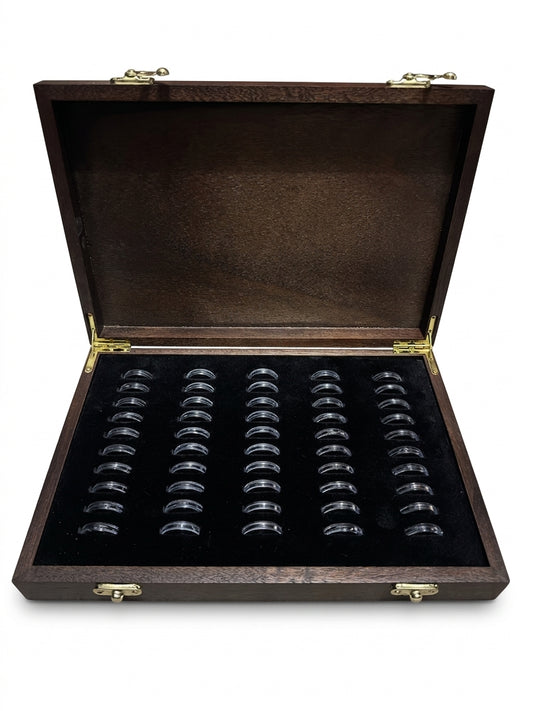
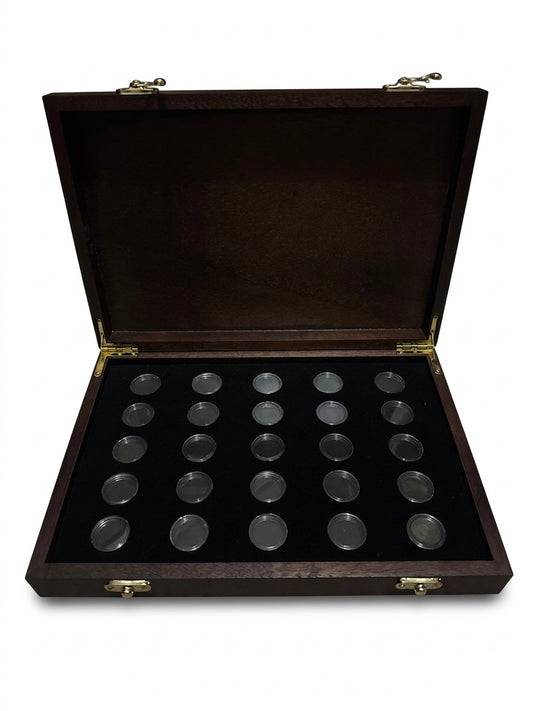
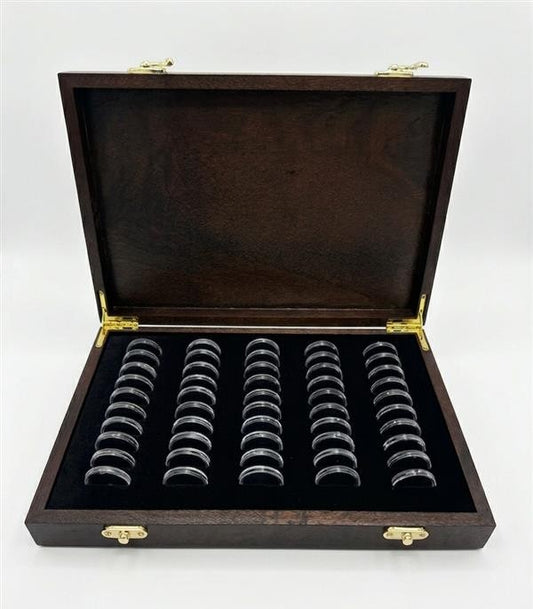
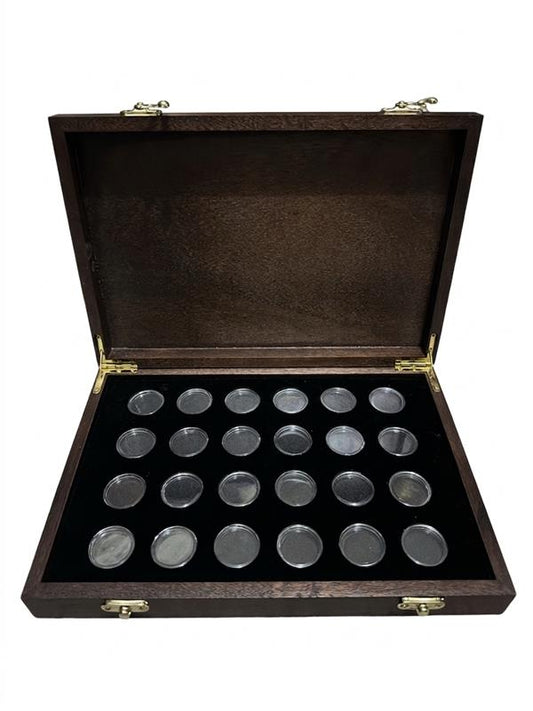
Store properly. Key date coins deserve protection commensurate with their value. Capsules appropriate to each denomination's diameter, stored in a purpose-built display case, protect against the environmental factors that degrade coins over time — humidity, UV exposure, and physical contact chief among them.
Building Your Collection
The key dates outlined in this guide represent some of the most rewarding targets in Australian decimal collecting. Some — like the 1966 round fifty cent — are achievable for most collectors with patience. Others — like a high-grade 1968 one cent or a verified 2000 mule — require both persistence and investment.
What unites them is the story each one tells: of minting decisions made under pressure, of errors that slipped through, of metals withdrawn because their value exceeded their denomination. These are not just coins. They are records of the decisions, accidents, and economics of a nation finding its monetary identity.
They deserve to be preserved accordingly.
Handcrafted mahogany display cases fitted precisely for Australian decimal coin capsules — protecting your collection while keeping every piece visible.
Browse The Collection