The 1966 Australian Decimal Changeover
How Valentine's Day 1966 changed everything — and why it matters to collectors today
On the morning of 14 February 1966 — Valentine's Day — Australians woke to a new currency. After 140 years of pounds, shillings and pence, the dollar and cent arrived. Banks opened to long queues of curious citizens. Newspapers reported that even the Decimal Currency Board was surprised by how smoothly things went.
It was, by almost any measure, one of the most seamlessly executed government reforms in Australian history. And for collectors, it was the moment that created some of the most fascinating coins in the nation's numismatic story.
The Long Road to C-Day
The idea of decimalising Australia's currency was not new in 1966. As far back as 1901 — the year of Federation — a parliamentary select committee had recommended decimalisation. Various governments considered it, debated it, and ultimately deferred to Britain, which remained firmly opposed to abandoning its own imperial currency system.
The post-war decades changed the calculation. Australia's export trade was growing rapidly, and the complexity of pounds, shillings and pence — with its twelve pence to the shilling and twenty shillings to the pound — was creating measurable inefficiencies in commerce and industry. Research at the time estimated decimalisation would save the Australian economy more than £11 million per year, quickly offsetting the £30 million cost of conversion.
In 1959, Treasurer Harold Holt appointed a Decimal Currency Committee to examine the merits of change. By 1963, the government had made its decision. The Currency Act that year nominated 14 February 1966 as Changeover Day — with a two-year transition period during which both currencies would remain legal tender.
The Emu. The Koala. The Digger. The Roo. The Oz. The Dinkum.
A public naming competition in 1963 generated a wave of distinctly Australian suggestions for the new currency. The government — guided by Treasurer Harold Holt — overruled them all and announced the currency would be called the Royal, to emphasise Australia's connection to the Crown. The public response was immediate and largely unenthusiastic. Within months, the name was quietly changed to the dollar.
Stuart Devlin and the Coins That Defined a Nation
The new currency needed new designs — designs that were unmistakably Australian. A limited competition was held among six designers. The winner was Stuart Devlin, a Geelong-born sculptor and goldsmith who had been working in London.
Devlin's reverse designs for the six initial denominations are among the finest coin designs in the world. Each featured one of Australia's native fauna — chosen with deliberate national pride:
Feathertail Glider
Frilled-Neck Lizard
Echidna
Superb Lyrebird
Platypus
Coat of Arms
Devlin's designs have proven remarkably enduring. The five cent, ten cent and twenty cent reverses remain essentially unchanged today — more than sixty years after they first entered circulation. They are one of the most recognisable expressions of Australian identity in everyday life.
Operation Fastbuck — Arming the Nation with New Money
The logistics of C-Day were extraordinary. The Federal Government calculated that 1.7 billion new coins would be required to decimalise the nation. A brand-new mint — the Royal Australian Mint in Deakin, Canberra — was constructed specifically for the task at a cost of $9 million, and opened in 1965. The Perth Mint struck nearly 105 million one cent and two cent pieces alone.
The distribution of 600 million coins and 150 million banknotes across the country became known as Operation Fastbuck. Beginning three months before C-Day, hand-picked, well-armed police escorted convoys of semi-trailers to the nation's 5,000 bank branches. Banks closed four days before C-Day to convert their machinery and processes.
When they reopened on the morning of 14 February, Australians were ready. In five hours of trading on 17 February alone, 48 tons of old pennies were returned to the Bank of New South Wales. The conversion program was expected to take two years — it was completed in eighteen months.
Dollar Bill and the Campaign That Won a Nation
Perhaps no element of the changeover captured the public imagination more than Dollar Bill — an animated cartoon character created to educate Australians about the new currency. Dollar Bill appeared on television every night from April 1965, singing a jingle written to the tune of the traditional folk song Click Go the Shears:
"In come the dollars and in come the cents, to replace the pounds and the shillings and the pence. Be prepared folks when the coins begin to mix, on the 14th of February 1966."
The campaign worked beyond all expectations. By September 1965, the Decimal Currency Board was receiving 500 fan letters a month from children writing to Dollar Bill. Schools introduced special decimal currency curricula. The Retail Traders' Association ran lectures for members. A telephone information service called The Dollar Jills fielded public enquiries.
When C-Day arrived, the transition was so smooth that Australia's public education model was used as a template by Britain and New Zealand in their own subsequent decimalisation campaigns. The success of C-Day is widely regarded as paving the way for metrification in the early 1970s.
What C-Day Means for Collectors Today
The 1966 changeover created an entire collecting field in its wake — and many of the key dates in Australian decimal coinage trace their significance directly to this period. The transition period — during which both old and new currencies circulated simultaneously — produced some of the most significant coins in Australian numismatic history.
The 1966 round fifty cent, struck in 80% silver, was hoarded from the moment it appeared. Within three years, rising silver prices meant its bullion value exceeded its face value and it was withdrawn — but not before millions had been quietly set aside by Australians who sensed, correctly, that they were holding something worth keeping.
The 1966 wavy baseline twenty cent, struck at the Royal Mint in London from different dies, became one of the first decimal varieties — a coin indistinguishable from its counterparts to the untrained eye, yet worth multiples of the standard issue.
Even the pre-decimal coins gained value overnight. As old pennies, shillings and florins disappeared from circulation, collectors scrambled to preserve what remained. The 1930 penny — already known to specialists as a rarity — became a national obsession almost immediately. The changeover created collectors who had never considered themselves collectors before.
Sixty years on, the 1966 series remains the foundation of Australian decimal collecting. For guidance on keeping these coins properly, our care and storage guide covers everything you need to know. Every serious collection begins with C-Day — with the coins that introduced Australia to its new monetary identity, and the silver fifty cent that was withdrawn almost as quickly as it arrived.
The conversion was not merely economic. It was the moment Australia chose to see itself differently — and minted that choice in silver, copper, and nickel.
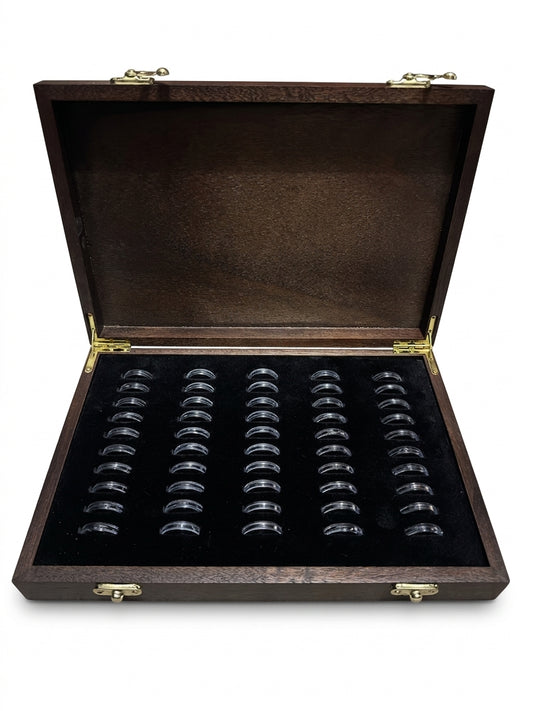
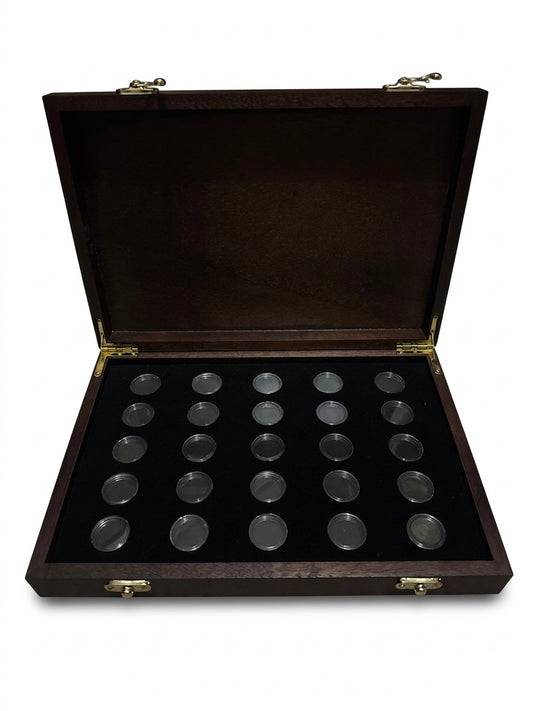
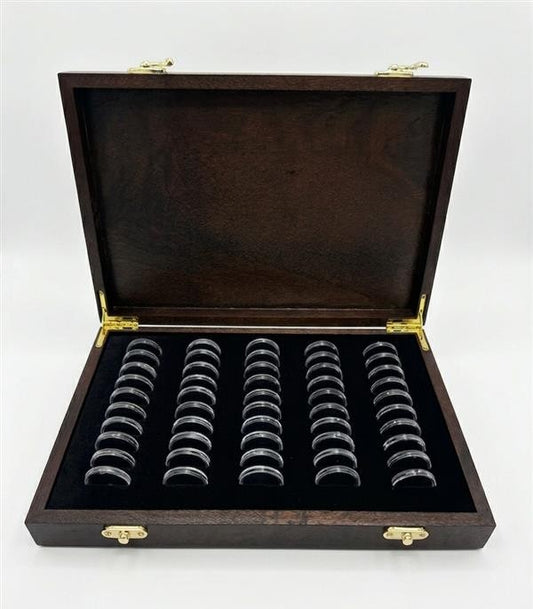
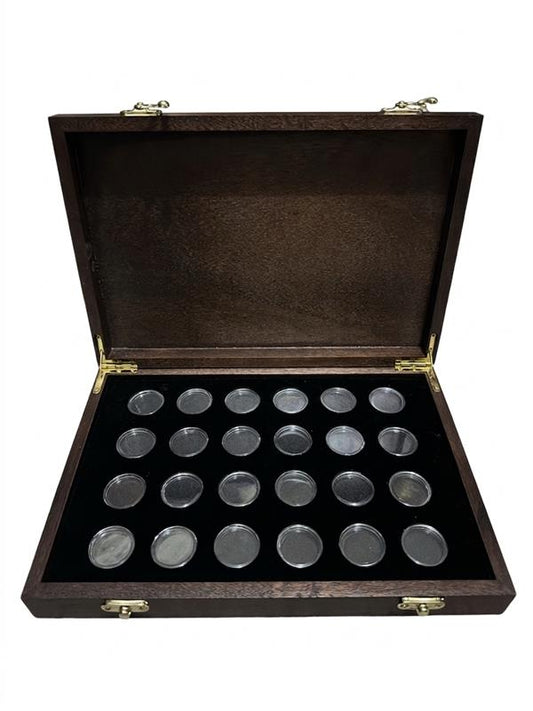
The coins of 1966 deserve more than a drawer. Handcrafted mahogany display cases fitted precisely for Australian decimal coin capsules — protecting your collection while keeping every piece visible.
Browse our range — including cases designed specifically for the 1966 fifty cent and the full decimal series.
Browse The Collection