The 2012 Red Poppy Two Dollar
The coin that changed how Australia collects its two dollar — and why it remains the most sought-after in the series
There are coins that collectors pursue because catalogues tell them to. And then there are coins that collectors pursue because something about the object itself — its story, its scarcity, the moment it represents — makes them unwilling to stop looking until they find one. The 2012 Red Poppy two dollar is the second kind.
It is the coin that transformed the Australian two dollar denomination from an overlooked everyday token into one of the most actively collected coins in the decimal series. Understanding it means understanding something about how collector markets are made — and how a single release can permanently change a denomination's status.
The First Coloured Two Dollar — A New Technology
In 2012, to mark Remembrance Day, the Royal Australian Mint issued a two dollar coin with a red poppy printed on its surface — the first coloured two dollar coin ever released for Australian circulation. The technology used to apply the colour was relatively new to circulating coin production, and in hindsight, imperfectly suited to the demands of everyday use.
The coin's mintage was 503,000 — against an annual average of approximately 28 million standard two dollar coins. At less than two percent of the typical annual issue, it was always going to be scarce in circulation. But the combination of limited mintage and fragile colouring created a second layer of scarcity: coins that entered general circulation quickly lost their red poppy to the friction of pockets and purses. Finding an example with its colour fully intact became, for many collectors, a genuine pursuit.
A 'C' mintmark version was also issued through RSL branches — a collector edition in a presentation card. These examples, never intended for circulation, retain their colour intact and represent the more collectible of the two versions.
The National Search — Change Checking Becomes a Pastime
The Red Poppy's release coincided with the early growth of Australian coin collecting communities on social media. Images of the coin circulated rapidly. Forum threads documented sightings. The question — "has anyone found one in change?" — became a recurring conversation across collecting groups, Facebook pages, and school staffrooms.
This public engagement did something that no catalogue designation or dealer recommendation could achieve: it made the Red Poppy a coin that non-collectors knew about. Parents began checking their two dollar coins before spending them. Shopkeepers held examples back. The coin entered the national consciousness in a way that very few numismatic releases ever manage.
The downstream effect was significant. Every coloured two dollar coin issued after 2012 entered a market primed by the Red Poppy's precedent. Collectors who had never previously accumulated two dollar coins began building collections. The denomination was transformed.
"The Red Poppy did not just create a key date. It created a generation of two dollar collectors who would not otherwise have existed."
The Collector's Journal — Thomas Anne CollectiblesAfter 2022 — A New Layer of Significance
The passing of Queen Elizabeth II in September 2022 added a dimension to the Red Poppy's significance that no one could have anticipated in 2012. It is one of the last coloured two dollar coins to bear her portrait — issued in the final decade of her reign, before her effigy was retired from Australian coinage. That context, invisible at the time of issue, is now understood by collectors as part of the coin's identity.
The same applies to the 2013 Purple Coronation two dollar — another coloured coin bearing the fourth portrait of Elizabeth II, struck to mark the 60th anniversary of her coronation. Together, these two coins represent the era in which Australian two dollar collecting matured — and both now carry the additional weight of being historical objects.
In the current market, a well-preserved Red Poppy two dollar in circulated condition with full colour intact achieves $200 to $400. The 'C' mintmark collector version, in original presentation card, commands $300 to $500. These are not speculative figures — they reflect sustained, consistent demand from a collector base that understands exactly what it is holding.
Preserving the Red Poppy
The fragility of the early coloured coin technology makes storage a matter of genuine consequence for the Red Poppy. The colour is applied as a surface treatment and is vulnerable to friction, moisture, and direct contact with other coins or materials. Examples stored loose in a coin envelope or mixed with other coins will show colour degradation over time. For full storage guidance see our article on the care and storage of coins.
A coin this significant deserves to be seen, not stored in the dark. Individual capsule protection, in a case that keeps the face visible, is the only treatment appropriate for an example in this condition. The Red Poppy was made to be seen whole.
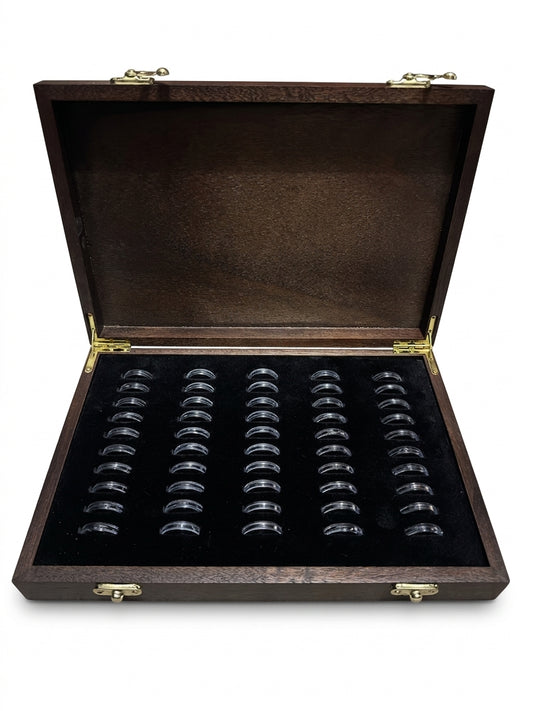
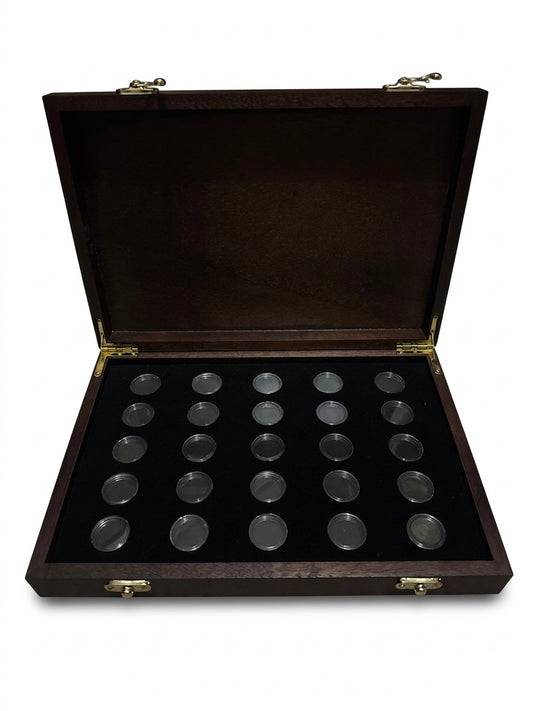
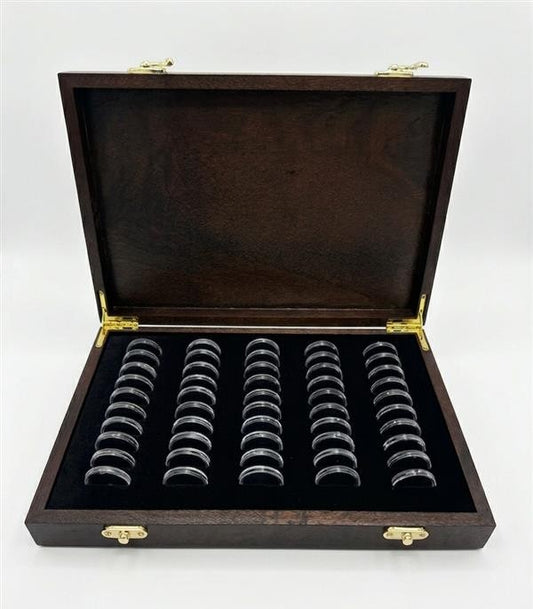
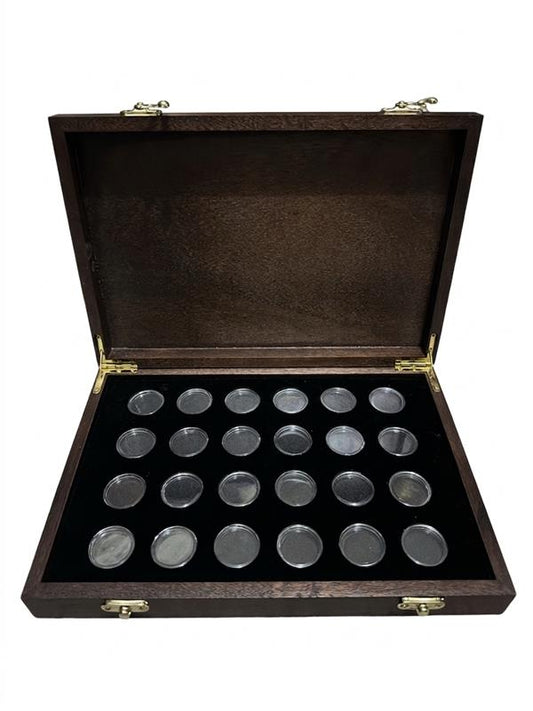
Handcrafted timber display cases built for the Australian decimal series — protecting your collection while keeping every coin visible.
Browse The Collection