The Collector's Environment
Where a case lives matters as much as what it is made of
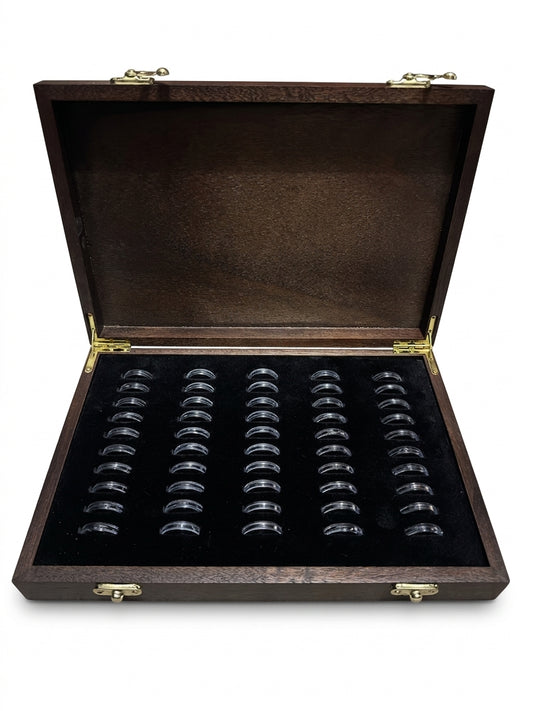
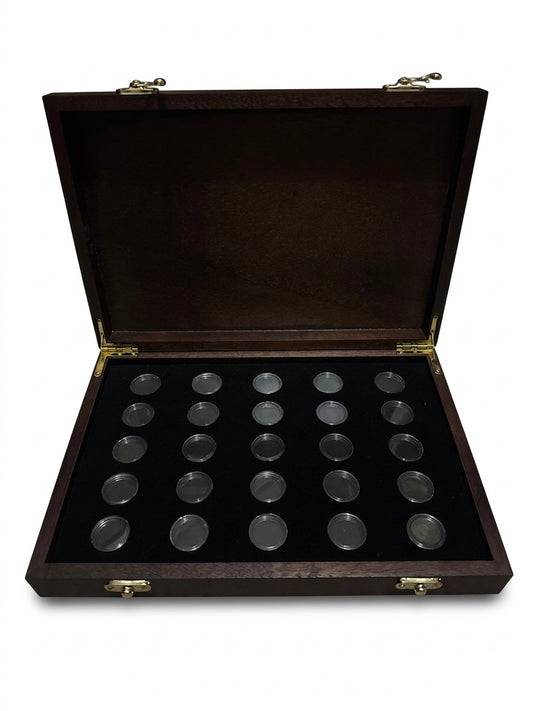
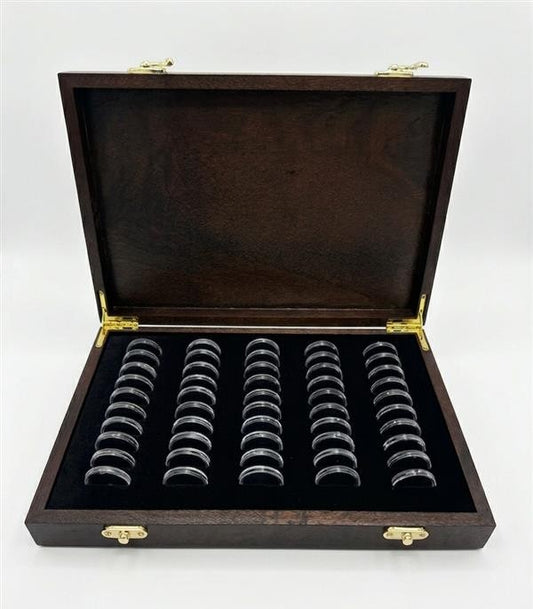
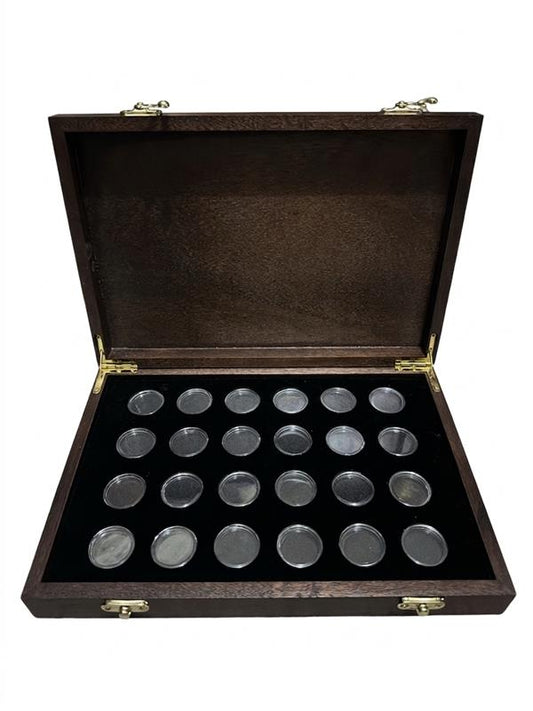
A Thomas Anne case is built to protect its contents. The archival foam, the inert materials, the precision fittings — these decisions are made in the workshop, before the case reaches you. But the environment that case lives in once it arrives at your home is decided by you. And the environment is capable of undoing, over time, everything the case was built to do.
This is not a reason for anxiety. It is a reason for a few straightforward decisions — many of which are covered in detail in our guide to the care and storage of coins — about where the case sits, what light falls on it, and what the humidity in that space does across the seasons.
Humidity — The Primary Threat
Humidity above approximately 55% is the point at which silver toning accelerates meaningfully. The 1966 round fifty cent, the annual proof sets, the silver commemoratives — these are the coins in a decimal collection most affected by persistent humidity. Cupro-nickel is more resistant, but sustained moisture exposure will affect any metal surface over sufficient time.
The practical implication is straightforward: do not store a case in a space where humidity is uncontrolled or persistently high. Basements, garages, garden sheds, and bathroom cabinetry are all environments that present unnecessary risk. A climate-controlled interior room — a study, a living room, a bedroom — where temperature is relatively stable year-round is the correct home for a collection.
For collectors in persistently humid climates — coastal Queensland, tropical Northern Territory — silica gel desiccant in the storage area provides a useful buffer. It does not replace appropriate placement but meaningfully reduces the moisture load in the immediate environment of the case.
Light — The Overlooked Factor
Ultraviolet light fades the applied colour on coloured coins and causes surface changes in all metals over time. Direct sunlight is the most acute risk — a case sitting in a sunny window, even for part of the day, is receiving UV exposure that accumulates without visible evidence until the damage is done.
For collectors of the coloured $2 series — the Red Poppy, the Coronation, and subsequent coloured issues — UV protection is not optional. The colour is a surface treatment applied to the coin and it will fade under sustained UV exposure. A case kept away from direct sunlight, or in a room with UV-filtering glass, protects the most vulnerable coins in the decimal collecting canon.
The timber case itself responds to direct sunlight in its own way — the finish bleaching gradually toward the light source while the protected faces remain at their original depth. For the aesthetic quality of the case, as much as the coins inside it, indirect or artificial light is preferable to direct sun.
"The case protects the collection from the case. The environment protects the collection from everything else. Both matter."
Thomas Anne CollectiblesTemperature — Stability Over Level
Temperature itself is less critical for coin storage than temperature fluctuation. A collection kept at a consistent 25 degrees is safer than one that cycles between 18 and 30 degrees as seasons change. The expansion and contraction caused by temperature cycling stresses the seals of capsules and the joints of the case over time — gradually, imperceptibly, but cumulatively.
This is another argument for an interior room with consistent climate rather than a space that experiences the full range of seasonal temperature. The goal is not perfect conditions — it is stable ones. A collection kept at stable, moderate conditions for thirty years will be in better shape than one kept at ideal conditions that fluctuate significantly.
The Right Place
A collection worth building is a collection worth placing well. The right place is not complicated to identify — it is a room you use, where the light is indirect, where the temperature is stable, and where the case can be seen and accessed without being in a hostile environment. In most homes, this describes the study or the living room. That is where a Thomas Anne case belongs.
Handcrafted timber display cases built for the Australian decimal series — protecting your collection while keeping every coin visible.
Browse The Collection