What We Mean by Archival
On the term that matters most — and what it actually requires
Archival is one of the most used and least understood words in collecting. It appears on packaging, in product descriptions, in the marketing of storage solutions that have no business using it. It has been applied so broadly that it has almost lost its meaning — which is unfortunate, because what it actually means matters enormously for the long-term condition of a collection.
When we describe a Thomas Anne case as archival, we mean something specific. This is what we mean.
The Origin of the Term
Archival standards were developed by libraries, museums, and archives — institutions whose entire purpose is the long-term preservation of objects and documents. The question they have spent decades answering is: what conditions, what materials, and what practices allow a physical object to survive without deterioration for the longest possible period?
The standards they developed — acid-free, inert, stable — describe materials and conditions that do not accelerate the natural aging of the objects they are in contact with. Archival materials do not introduce reactive compounds. They do not off-gas. They do not absorb and release moisture in ways that stress the objects they hold. They are, to the greatest possible extent, neutral participants in the storage environment.
Applied to coin storage, archival means: the materials in contact with or surrounding the coins do not contribute to their deterioration. This is a higher bar than it sounds.
What Non-Archival Storage Does
Most storage materials sold for general use contain compounds that are not inert. PVC — polyvinyl chloride — is the most common offender. It is present in many coin flips, some album pages, and the lining of storage boxes that are not specifically designed for archival use. The correct alternative for individual coin protection is a properly fitted archival capsule. As PVC ages, it off-gases a plasticiser compound that reacts with copper and silver surfaces, producing the characteristic green corrosion known as PVC damage. This process is slow, invisible in its early stages, and irreversible.
Acidic materials — certain papers, cardboard, and fabrics treated with bleaches or dyes — create a similar long-term problem. The acids they contain migrate to the coin's surface and accelerate toning and surface changes that would otherwise take decades to develop naturally.
These are not theoretical risks. They are documented in the collections of anyone who has stored coins in non-archival materials for long enough to see the results. The damage accumulates quietly, year by year, until the day the collector opens the case and understands that something has gone wrong — and that it went wrong a long time ago. For a full guide to protecting a collection correctly, see our article on the care and storage of coins.
"Archival storage does not preserve a coin. It simply refuses to damage it. The distinction matters — because most storage does one of the two, quietly, over time."
Thomas Anne CollectiblesWhat Archival Storage Actually Requires
For a coin collection, archival storage means four things: inert materials in direct contact with the coin, mechanical stability so that coins cannot move and create contact marks, a controlled environment that limits humidity and UV exposure, and a container that maintains these conditions over the long term rather than degrading and introducing new risks.
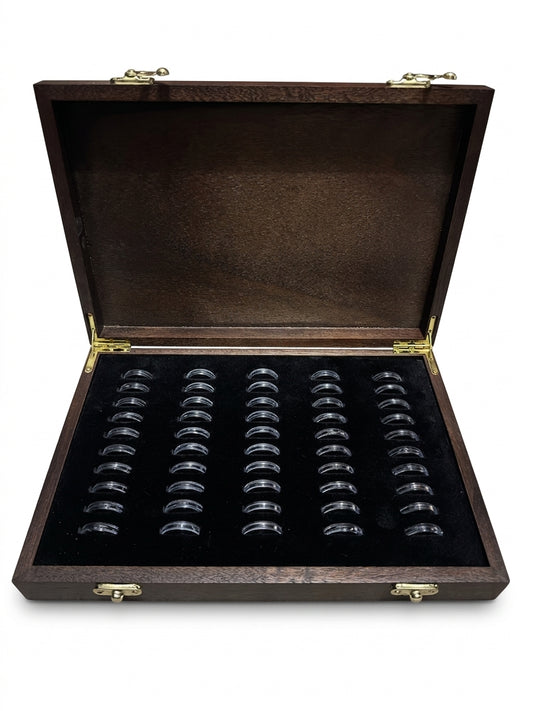
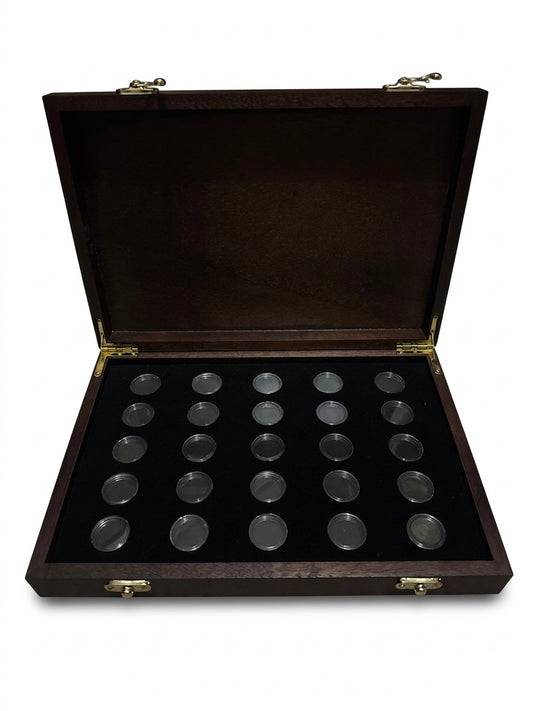
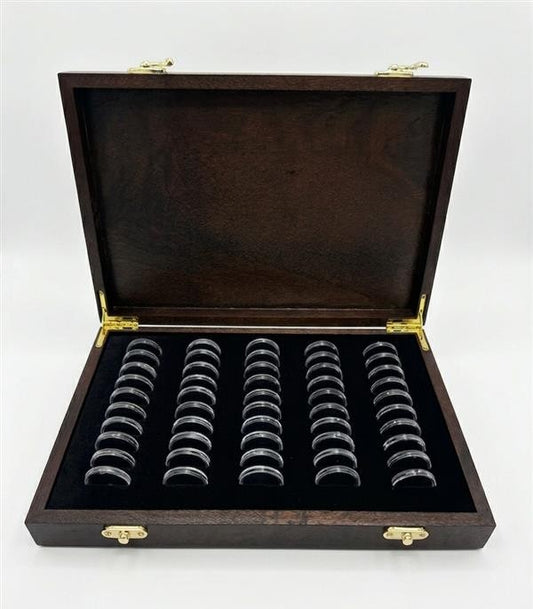
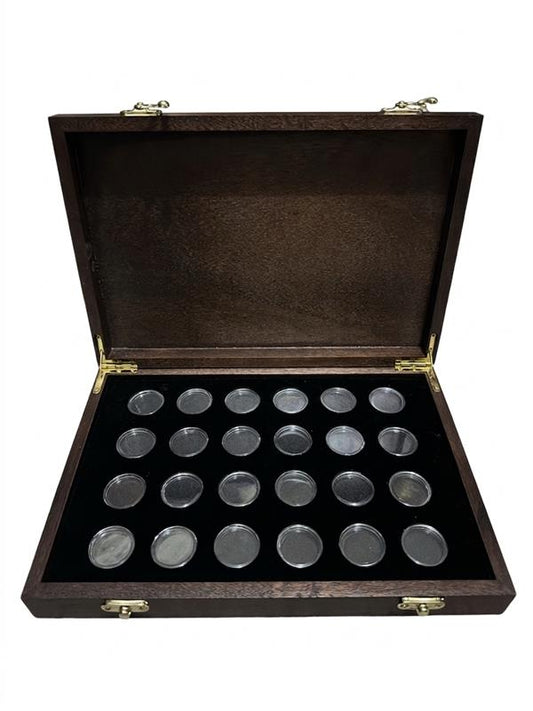
The foam in a Thomas Anne case is inert — it does not react with the metal surfaces it holds. The timber is stable and finished with a sealed coat that does not continue to off-gas reactive compounds over time. The case is dimensionally precise so that coins held in it cannot shift. These are the specific decisions that make the word archival honest rather than decorative.
Archival is not a feature. It is a commitment — to the idea that the collection you put in the case today should be in the same condition when it is opened in thirty years. Everything else follows from that.
Handcrafted timber display cases built for the Australian decimal series — protecting your collection while keeping every coin visible.
Browse The Collection