The Foam
On the interior of every Thomas Anne case — and why what holds your coins matters as much as what surrounds them
The exterior of a Thomas Anne case is what a collector first sees and handles. The timber, the finish, the hardware — these are the visible qualities, the ones that communicate the standard of the object before it is opened. But it is the interior that does the actual work. And the interior is foam.
Foam is not a glamorous material. It does not photograph with the warmth of timber or catch the light the way brass does. But for a coin that has been accumulating value — monetary, historical, personal — for decades, the foam is the most important part of the case. It is what the coin actually touches. It determines whether the collection is safe.
What the Foam Must Do
A coin stored improperly over years will show it. Contact with reactive materials — PVC, rubber, acidic paper, unevenly dyed fabric — creates surface changes that no treatment can reverse. Toning from reactive foam compounds. Hairlines from movement inside a recess that is too large. Pressure marks from a recess that is too small. The foam is either working for the collection or against it, and the difference is not always visible until significant time has passed.
The foam used in Thomas Anne cases is archival grade — inert, stable, and free from the plasticisers and off-gassing compounds that cause the reactions described above. It does not interact chemically with the metal it holds. It will not change the surface of a coin in storage. This is the baseline requirement, and it is one that a surprising number of storage products do not meet.
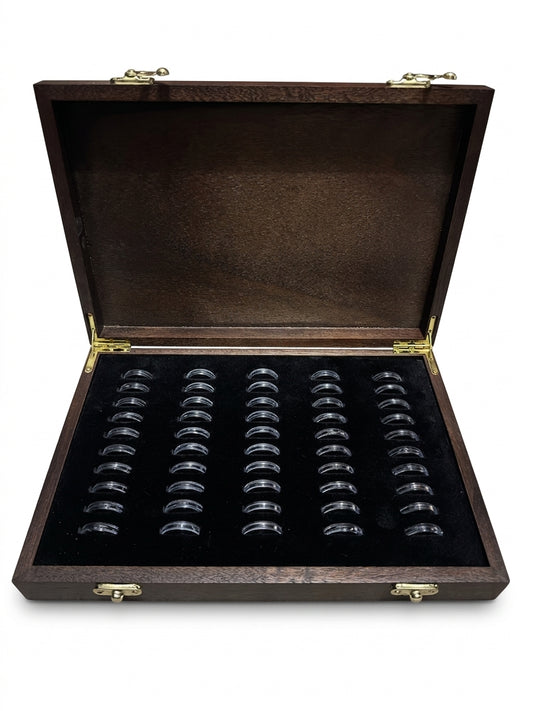
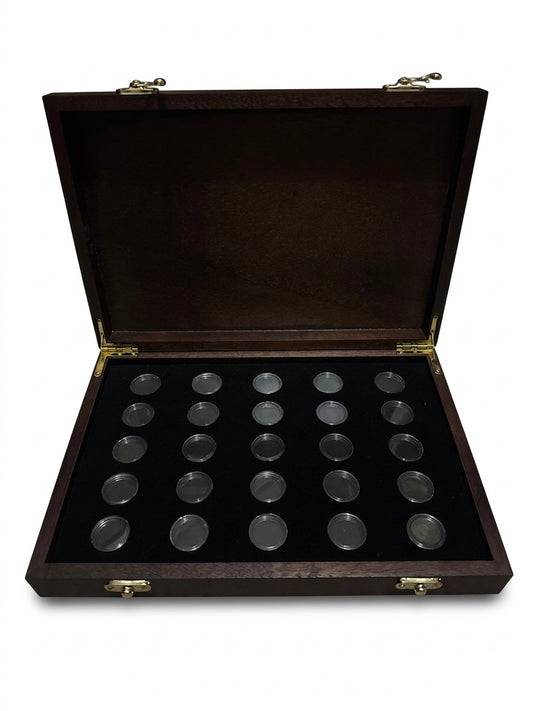
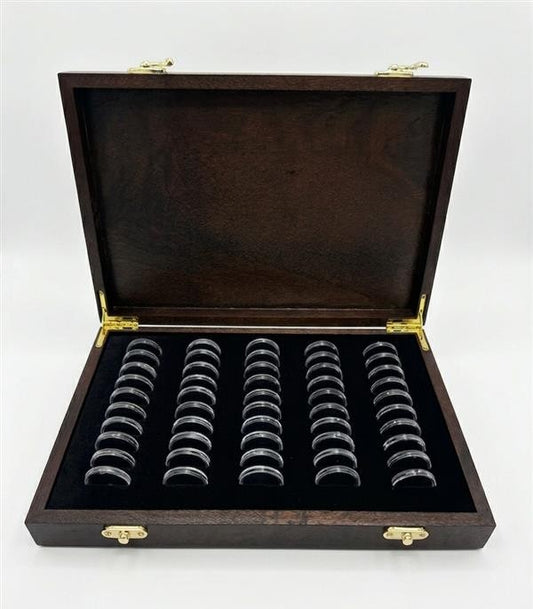
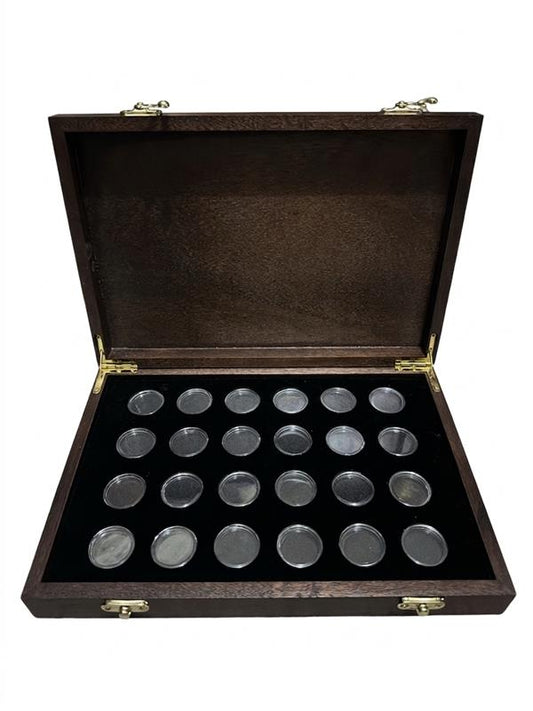
Beyond chemistry, the foam must also be mechanically appropriate. The recesses are cut to a specific depth that holds each coin securely without pressure — deep enough that the coin cannot shift and create contact marks, shallow enough that it can be removed cleanly with fingertips rather than tools. The diameter of each recess is sized to the denomination it holds, with tolerances that do not allow movement — the same precision that applies to the capsules that sit within them.
"A coin can survive centuries in the right conditions and be compromised in a decade by the wrong ones. The foam is the condition."
Thomas Anne CollectiblesPrecision Fitting — Why It Matters
Each Thomas Anne case is designed for a specific denomination. A $2 coin has a diameter of 20.50mm. A 50 cent coin has a diameter of 31.65mm. These are not approximate — they are precise, and the recesses in our foam are cut to match them precisely rather than to a generic size that accommodates a range.
This precision is what allows the collection to be stored and displayed simultaneously. When a coin sits in a recess sized to its exact diameter, its full face is visible from above — the design, the date, the condition. Nothing is hidden by an oversized recess that allows the coin to tilt and obscure part of the surface. The coin is held in the position that shows it best.
It also means the collection can be moved without individual coins being removed and replaced. The case can be lifted, tilted, and transported with every coin secure. This is not a theoretical benefit — it is the practical difference between a collection stored in a case and a collection displayed in one — a distinction explored further in two formats, one philosophy.
The Interior as a Statement
When a Thomas Anne case is opened, the interior communicates something before a coin is placed in it. The recesses are neat and consistent. The foam sits flush with the timber surround. The colour is chosen to contrast with the coins that will sit in it — to enhance the display rather than compete with it.
An empty Thomas Anne case should look like it is waiting. Not unfinished — waiting. The collection it was made for is the last part of the object. Without it, the case is only half complete.
Handcrafted timber display cases built for the Australian decimal series — protecting your collection while keeping every coin visible.
Browse The Collection