Two Formats, One Philosophy
On flat display and vertical storage — why both exist, and how the choice between them reveals something about the collector
Thomas Anne cases come in two formats: flat display and vertical storage. They are designed for the same coins, built to the same standard, and serve the same purpose of archival protection. But they represent two fundamentally different relationships between a collector and their collection — and choosing between them is not simply a practical decision.
It is a statement about what the collection is for.
Flat Display — The Collection as Exhibition
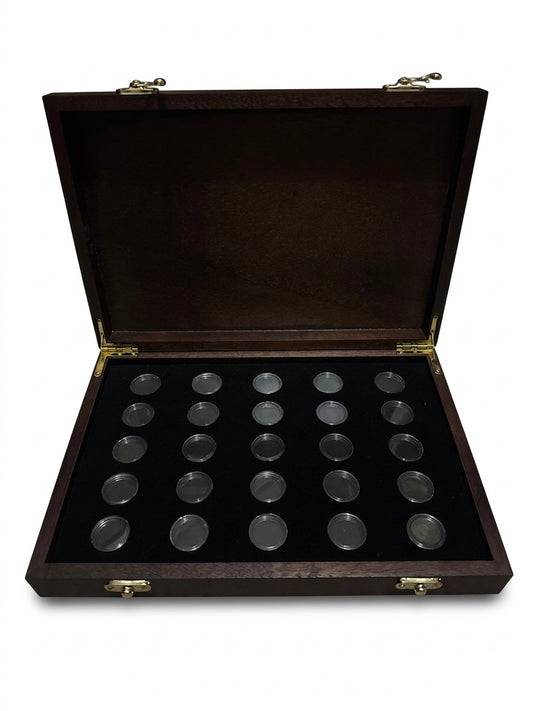
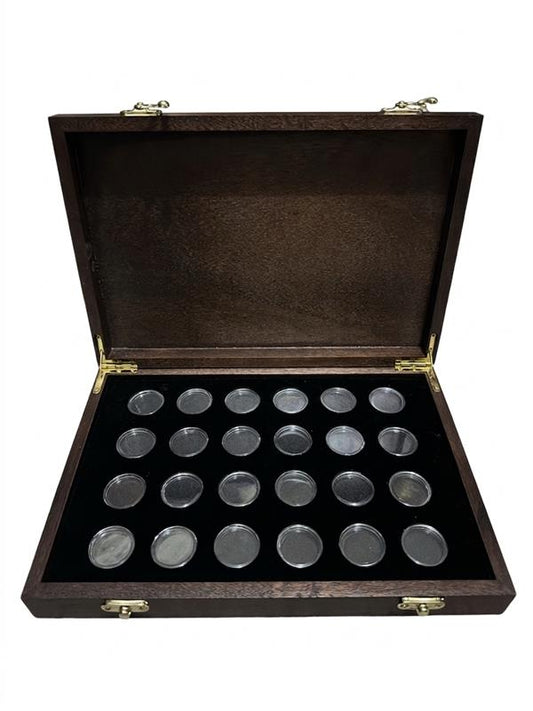
In a flat display case, each coin sits horizontally in its own recess with its full face visible. Open the case and you see the collection as a whole — every coin in its place, the obverse portraits or the reverse designs presented simultaneously. The effect is immediate and satisfying in a way that cannot be replicated by any other format.
The flat display format is for the collector who wants to see what they have built. The years of accumulation, the gaps still to be filled, the key dates sitting alongside the common dates in the same plane. The collection as a visual argument for itself.
It holds fewer coins than the vertical storage format — the horizontal orientation requires more surface area per coin. A flat display case for the $2 denomination holds 25 coins. The vertical storage equivalent holds 50 in the same footprint. This trade-off between visibility and capacity is the central distinction between the formats.
Vertical Storage — The Collection as Archive
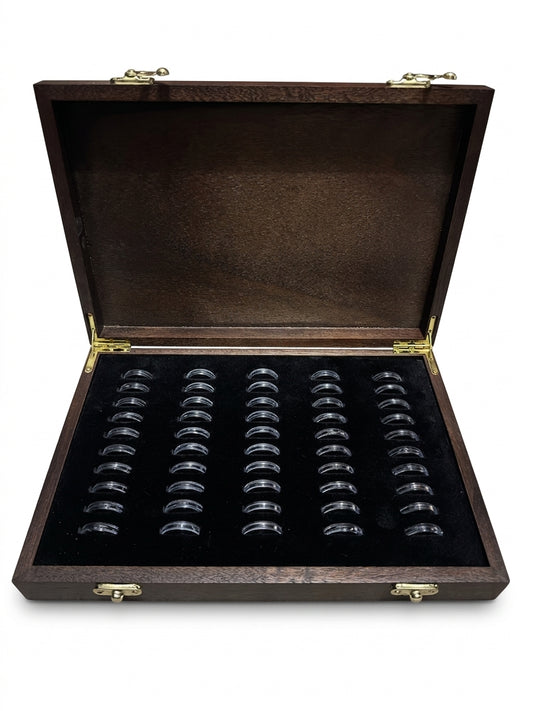
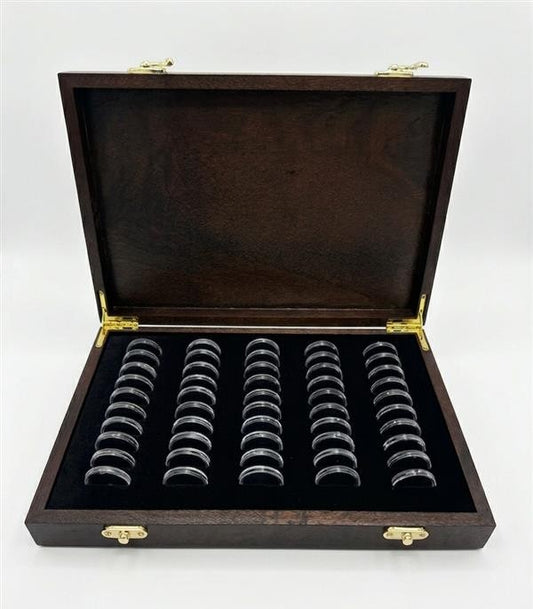
In a vertical storage case, coins stand on their edges in rows, held securely by foam walls that grip each capsule at the correct diameter. The coins face forward — you can see the edges, the year dates, the denomination — but the full face of each coin is not immediately visible without tilting the case or removing the coin.
The vertical storage format is for the collector who prioritises completeness. The date-run builder, the collector working toward a full set, the person who needs to know that the 1968 one cent is in there even if it is not on display every time the case is opened. Double the capacity in the same footprint is a significant advantage when the goal is comprehensive coverage.
Many serious collectors use both formats — a storage case for the working collection that is still being built, and a display case for the coins that have reached the standard they want to present. The two formats complement each other rather than compete.
"Display asks: what do I want to show? Storage asks: what do I want to keep? Both are the right question — at different points in the same collecting life."
Thomas Anne CollectiblesOne Philosophy, Two Expressions
What both formats share is the Thomas Anne philosophy: that a collection worth building deserves a home built for it specifically, from materials that will not compromise it, in a format that serves the collector's intent rather than a generic average of collector needs. The display case and the storage case are different expressions of the same belief — that the choice of how to keep a collection is part of the care given to it.
If you are uncertain which format to choose, consider what you do when you open the case. If you look at it — if the act of seeing the collection whole is part of why you collect — display is the right format. If you reach into it, if the case is a working tool rather than a finished object, storage suits you better. Both are legitimate. Both are respected here.
Handcrafted timber display cases built for the Australian decimal series — protecting your collection while keeping every coin visible.
Browse The Collection