How to Build a Complete Australian Decimal Set
A practical guide for the collector building a full date run of Australia's decimal coinage
The ambition to build a complete date run of Australian decimal coinage is one of the most satisfying long-term projects in Australian numismatics. It is also one of the most achievable — unlike the pre-decimal series, where certain dates are genuinely unobtainable for most collectors, the decimal series is broad but navigable, with a clear structure and a set of key dates that define the challenge.
This guide sets out what a complete decimal set actually means, how to approach building one, which dates require the most attention, and what the finished collection represents. It is written for the collector who is serious about the project — not the casual accumulator, but the person who intends to do it properly.
Defining the Set — What Are You Building?
The first question any decimal date-run collector must answer is what constitutes a "complete" set. The narrowest definition — one example of each denomination for each year of issue — already runs to several hundred coins when all seven denominations and sixty years of production are accounted for. A broader definition that includes major varieties, mintmarks, and composition changes can extend that count significantly.
Most serious collectors build denomination by denomination rather than year by year — completing a full date run of the one cent, then the two cent, working through to the two dollar. This approach allows a clear sense of progress and makes the key dates of each denomination clear as the collection develops.
The discontinued denominations — one cent (1966–1990) and two cent (1966–1990) — are natural starting points. Their series are closed, their key dates are known, and building a complete run from 1966 to 1990 in both cases is achievable within a reasonable budget and timeframe.
The Key Dates — Where the Collection Is Won or Lost
Every denomination has its key dates — the years where mintage was unusually low, where no mint set was issued, or where a variety creates a scarce sub-type. These are the coins that separate a good collection from a great one, and the coins around which the collecting strategy must be built.
1968 — lowest mintage in the series, no mint set that year. High-grade examples are genuinely difficult to locate.
1968 — same gap year as the one cent. The 1981 No SD variety is the most notable die anomaly in the series.
1972 — notably lower mintage than surrounding years. Uncirculated examples are the challenge.
2011 — lowest mintage in the series at 1.7 million. 1985, 1991, and 1997 also significant key dates.
1966 Wavy Baseline — London die variety. The most sought-after twenty cent variety in the series.
1966 Round — the foundation of the series. Silver composition, withdrawn 1969. Non-negotiable for any serious collection.
The two dollar series has its own key dates — the 1992 Mob of Roos (mintage approximately 8,000), the 2012 Red Poppy (503,000 mintage, fragile colour), and the 2013 Purple Coronation — as well as a growing run of coloured issues that reward systematic accumulation.
"A complete set is not built quickly. It is built correctly. The key dates will find you when you are patient enough to wait for them."
The Collector's Journal — Thomas Anne CollectiblesSources — Where to Find Decimal Coins
Coin shows remain the single best source for date-run collecting. The ability to examine coins in hand, compare grades across multiple examples, and negotiate directly with dealers who know their stock is irreplaceable. The major Australian numismatic shows — in Sydney, Melbourne, Brisbane, and Perth — typically have multiple dealers with deep decimal stock.
Online auction platforms — particularly Downies, Monetarium, and Noble Numismatics — regularly feature decimal coins in a range of grades. The advantage is breadth of stock. The disadvantage is that photographs rarely capture the full condition of a coin, and the ability to assess grade precisely is limited. For key date coins at significant values, purchasing from dealers who offer grading guarantees or return policies is advisable.
Bulk lots at auction represent a third source — and an underrated one. Inherited collections and estate lots occasionally surface at auction with decades of systematic accumulation intact, including key dates the seller did not recognise. Patience and knowledge at these auctions can yield significant returns for the prepared collector.
Condition Standards — What Grade to Collect
The question of condition standard is one every date-run collector must settle early. The most common approaches are: circulated throughout (practical, achievable, relatively affordable), uncirculated throughout (demanding, expensive at key dates, but produces a collection of uniform visual quality), or mixed — circulated for common dates, the best available for key dates.
The mixed approach is probably the most honest. For coins like the 1968 one cent, even Fine examples are genuinely scarce. Holding out for Uncirculated adds years to the project and significant cost. For common dates, however, circulated examples represent poor value relative to the premium paid for a coin with no particular scarcity or collector significance — and uncirculated examples from mint sets are often obtainable for marginal premiums.
Whatever standard you choose, apply it consistently. A collection built on clear principles — and stored accordingly — is a collection that holds its coherence. It tells a complete story. That is what a date run, at its best, should be.
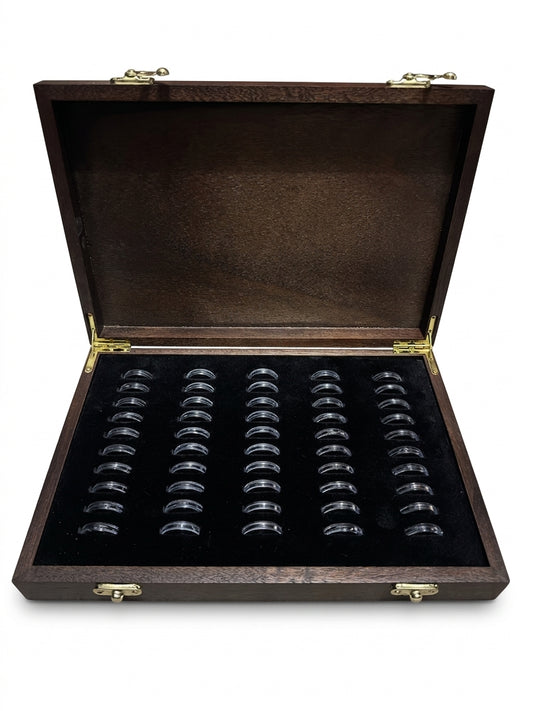
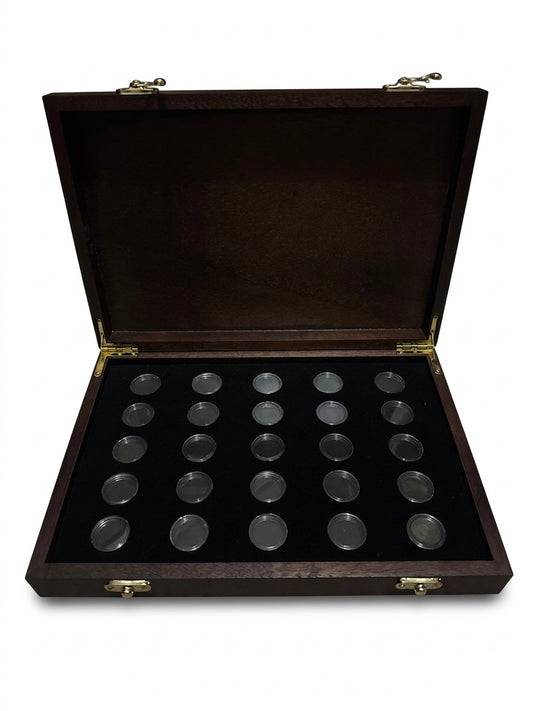
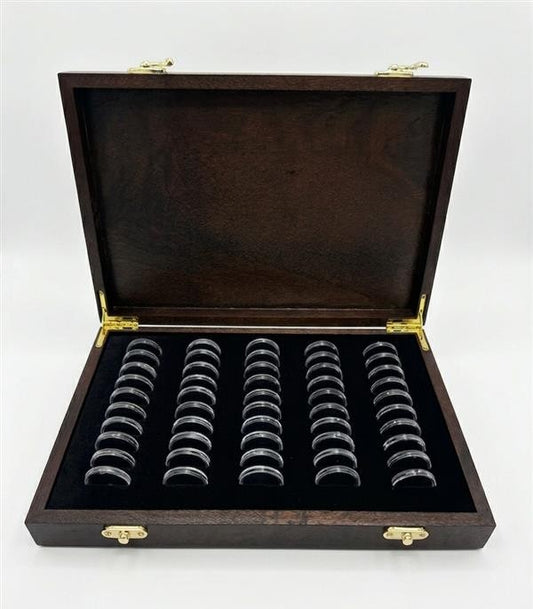
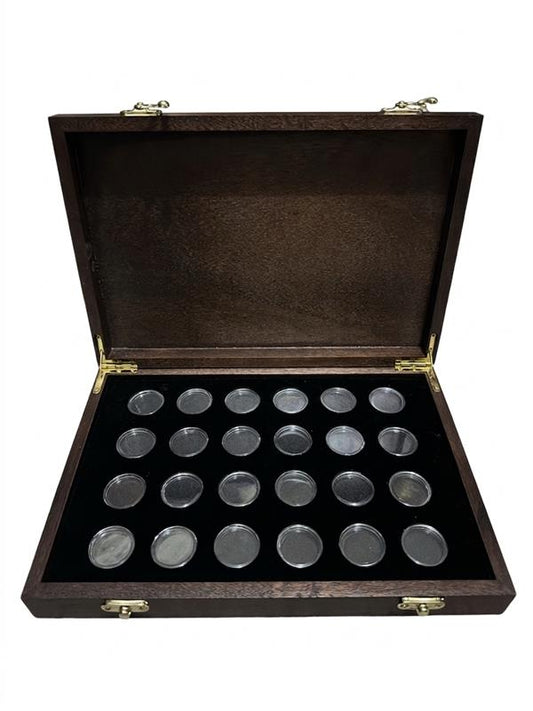
Handcrafted timber display cases built for the Australian decimal series — protecting your collection while keeping every coin visible.
Browse The Collection