The Engraving
On the moment the design appears — and what it means to reveal rather than apply
There is a moment in the making of an engraved Thomas Anne case that does not belong to us. We set the parameters. We run the laser. We know, roughly, what will emerge. But the specific result — the way the grain intersects the design, the particular warmth of the timber that appears, the exact character of the engraving on this board, cut on this day — that is decided by the material.
We wipe away the residue with a cloth. And then we see it for the first time. That moment is different every time, and it never stops being interesting.
Revealing Rather Than Applying
Most engraving adds something to a surface. A laser burns a mark into bare wood, darkening the fibres. A router cuts a channel that is filled with ink or paint. A stamp presses a design into the material. In each case, the result is something placed on top of or into the original surface.
The technique we use — paint ablation — works in the opposite direction. The laser removes the painted finish precisely, to expose what was already there underneath. The design does not arrive on the surface. It is found within it. The timber was always going to look the way it does once revealed. We simply opened the window.
This distinction matters because it means the engraving cannot be separated from the material it is in. The design and the grain are the same object. They exist in the same plane. When light falls across the lid at an angle, it catches both simultaneously — the painted surface and the exposed timber — and the imagery emerges from the interaction between them.
"The engraving is not a print. It is not a sticker. It is not applied — it is revealed. The timber was always there beneath the finish. The laser simply showed us where to look."
Thomas Anne CollectiblesThe First Reveal
After the laser passes, the engraved area is covered in fine carbon residue — the remnants of the vaporised paint. It obscures what is underneath. You know the design has been cut, but you cannot yet see it clearly. The wiping is a deliberate act: a cloth drawn across the surface, removing the residue, and the design appearing as you go.
It is not instantaneous. The imagery emerges progressively, detail by detail, as the residue is cleared. A kangaroo's ear first, then the line of its back, then the full composition — the Coat of Arms emerging from the timber. By the time the cloth is finished, the design is complete — but the experience of its arrival is gradual, and that gradualness is part of what makes it feel like discovery rather than production.
We wipe every engraved lid by hand for this reason. A machine could clean the surface. But the first reveal of a Thomas Anne engraving should be done with attention, not automation.
Why No Two Are Identical
The laser passes at the same calibration every time. The design file does not change. But the timber it meets is never the same — and it is the timber that determines the final result. Where the grain runs parallel to a fine line, the cut is sharp and the contrast strong. Where the grain crosses the engraving at an angle, the texture of the wood softens the edge and adds dimension. Where a knot or figure sits beneath the design, the exposed timber carries a different tone entirely.
The engraving on your lid exists nowhere else in exactly that form. It is a record of the specific piece of timber from which your case was made. That will always be true of it.
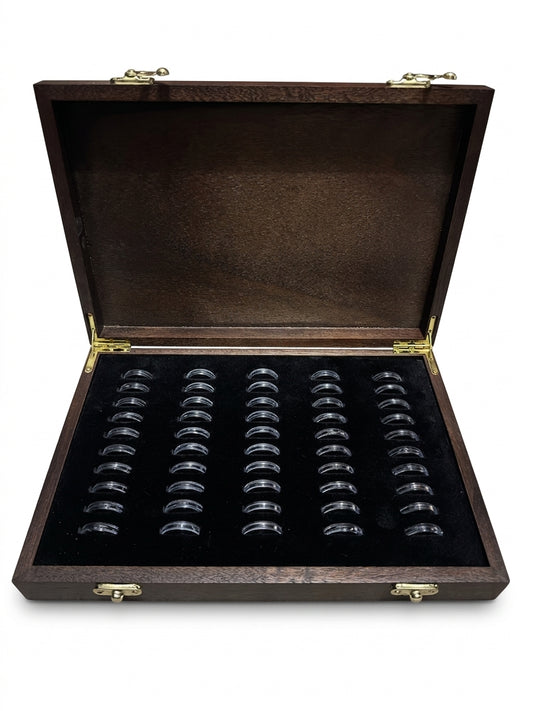
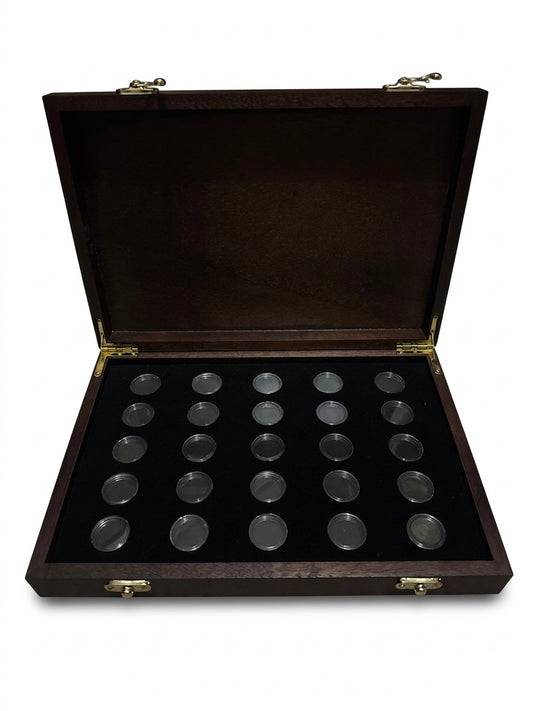
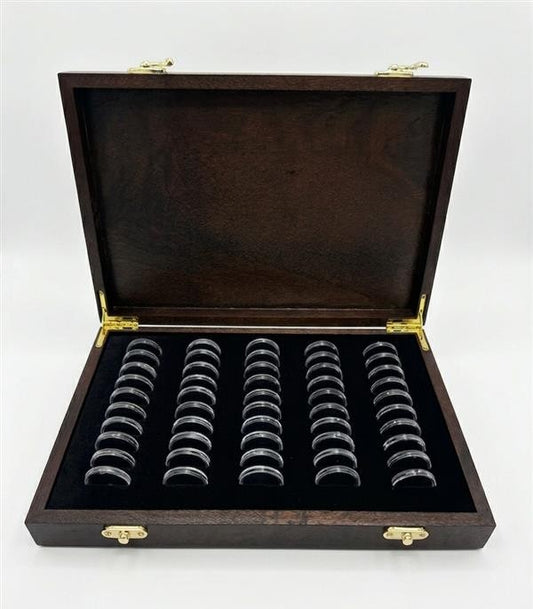
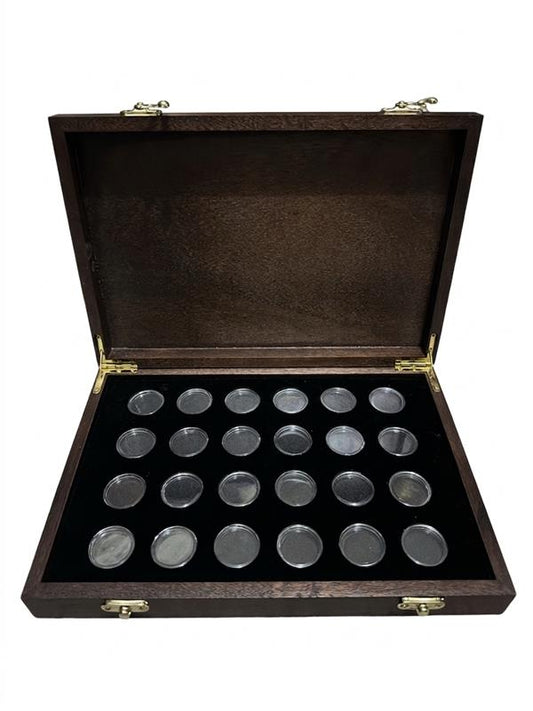
Handcrafted timber display cases built for the Australian decimal series — protecting your collection while keeping every coin visible.
Browse The Collection