Why Made to Order
On the deliberate decision not to hold stock — and what it means for everything that follows
Thomas Anne does not hold stock. There is no warehouse of finished cases waiting for an order to arrive. When you place an order, the case that arrives at your door does not yet exist at the point you commit to it. It will be made for you.
This is not a constraint we are working around. It is a choice — and one we made deliberately, because made-to-order and mass production are not just different processes. They produce fundamentally different objects.
What Mass Production Requires
A product held in stock must be made before it is sold. This means every decision about that product — the timber chosen, the finish applied, the hardware fitted, the foam cut — is made without knowledge of who will eventually receive it, how they will use it, or what collection it will hold. The object is optimised for storage, for shipping efficiency, for the probability of meeting an average customer's average expectations.
Mass production also places pressure on material decisions that would otherwise be straightforward. When you are making ten cases a year, you use the best timber available for each one. When you are making ten thousand, you use timber that is good enough — because the economics of sourcing the best material at that volume are unworkable, and because the customer receiving case number 4,347 will never know the difference between the board used for theirs and the board used for case number 4,346.
We know the difference. And we have chosen to remain at a scale where that difference is possible to uphold.
"Made to order means the case does not exist until there is a collection that needs it. We find something right about that."
Cristy-Anne — Thomas Anne CollectiblesWhat Made to Order Allows
When a case is made after it is ordered, the maker can make it properly. The timber selected for your case is selected for your case — for its grain, its density, its natural colour and character. It is not selected from whatever stock was available at the point a batch was scheduled into production.
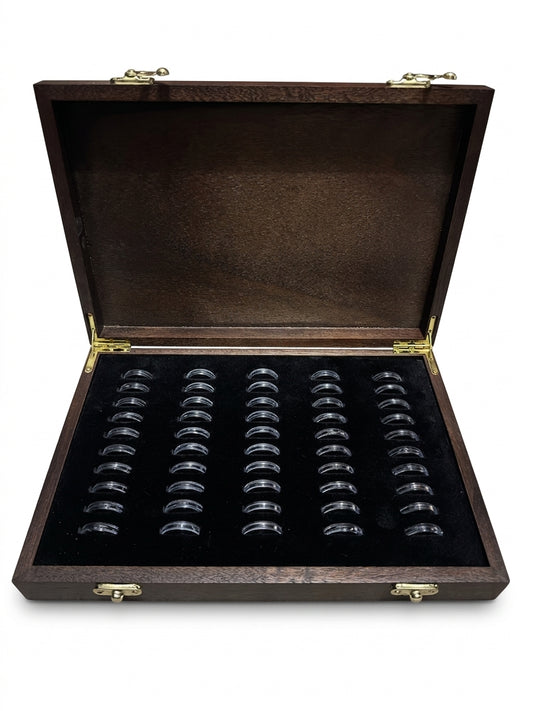
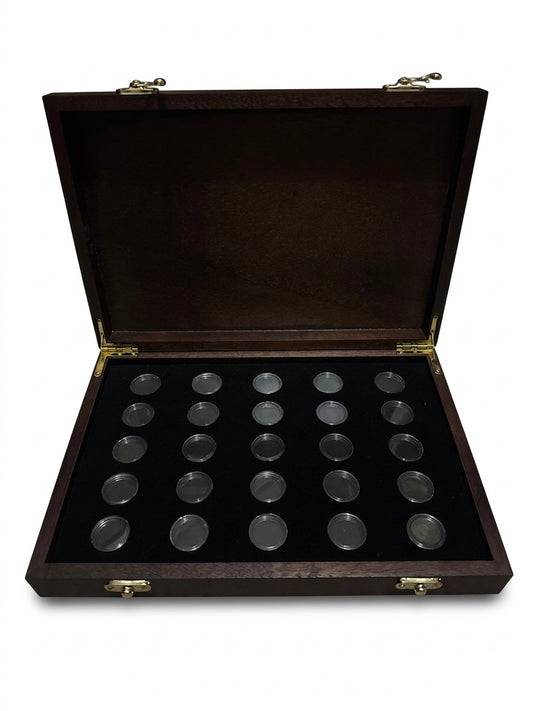
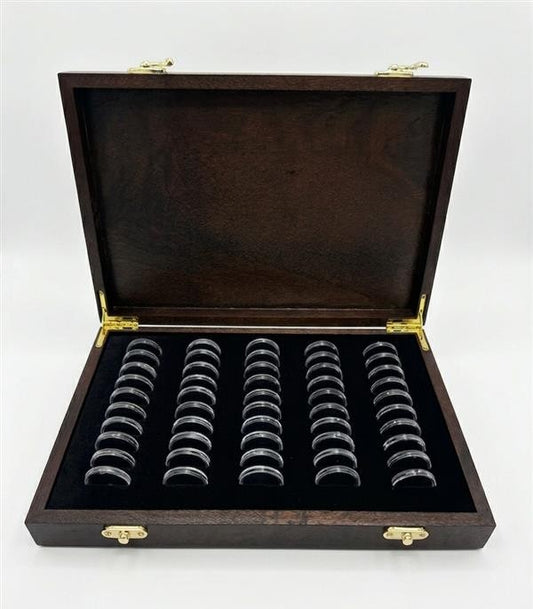
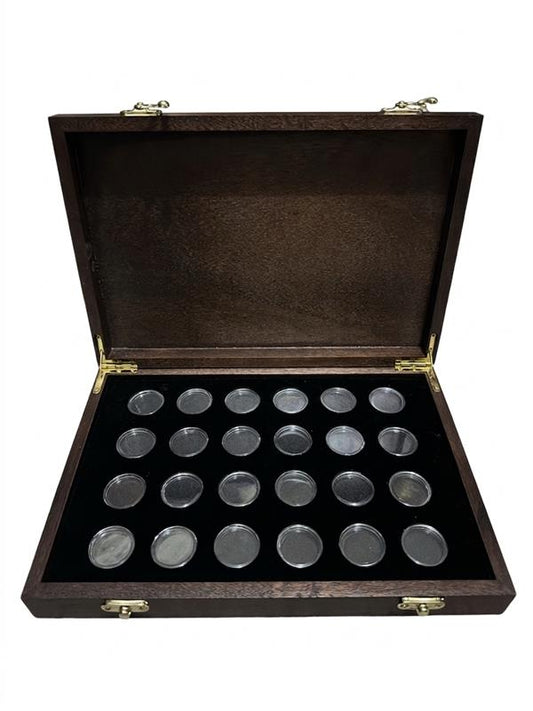
Made to order also means that the case can be made to your specification rather than to a fixed catalogue option. The Leviathan's four configurable inserts are only possible because the case is not built until the configuration is known. A stock product cannot offer this — it must be built to a single layout and sold on the assumption that the layout suits whoever buys it.
More broadly, made to order preserves the relationship between the maker and the thing being made. Each case passes through the same hands from raw timber to finished object — a process documented in full in the making of a Thomas Anne case. The person who selects the board is the same person who cuts it, finishes it, and fits the hardware. This continuity of attention is not possible at industrial scale, and it produces a different result.
The Wait
Made to order means a wait. Not a long one — but a real one. And we have found that collectors who understand what that wait represents accept it without difficulty. The case that arrives after a production window is not a product that was sitting in a box somewhere, depreciating, waiting to be sold. It is an object that did not exist before it was ordered for you.
We think there is something fitting about that. A collection built over years, held in a case made specifically for it, by a maker who knew it was coming. The wait is part of the relationship between the object and the person who ordered it — and that relationship begins before the case is complete.
Handcrafted timber display cases built for the Australian decimal series — protecting your collection while keeping every coin visible.
Browse The Collection