The Australian Dollar — A Collector's Guide
Portrait changes, key dates, and the evolution of the Mob of Roos from 1984 to present
The Australian dollar coin was introduced on 14 May 1984 — nine years after the two cent was issued at the outset of decimalisation in 1966, and in response to rising production costs that made the one dollar note increasingly uneconomical to maintain. The coin that replaced it carried a reverse design that has remained, in its essential form, one of the most recognisable in the decimal series: five kangaroos in dynamic motion, designed by Stuart Devlin.
Assembling a complete date run of the dollar coin is one of the most satisfying projects in Australian decimal collecting. The series spans four decades, includes three distinct obverse portraits, contains one of the most significant key dates in the modern era, and remains an active denomination with new issues each year. This is a guide to collecting it properly.
The Three Obverse Portraits
Australian coins have carried three different effigies of Queen Elizabeth II across the history of the dollar series, and since 2023 a portrait of King Charles III. Each change marks a distinct collecting era within the series.
Arnold Machin (1984 only). The first dollar coins, struck in 1984, carried the Machin effigy of the Queen — the same portrait used on Australian coins since 1966. This effigy appears only on the 1984 dollar, making that year distinctive for collectors assembling a portrait-complete run.
Raphael Maklouf (1985–1998). A new portrait by Raphael Maklouf was introduced in 1985, showing the Queen wearing the George IV State Diadem. This effigy was used across fourteen years of dollar production and covers the series' key date — the 1992 — as well as the years of the most significant mintage variation.
Ian Rank-Broadley (1999–2022). The Rank-Broadley effigy — a more mature portrait, showing the Queen without a crown — was introduced in 1999 and remained in use for over two decades. It is the portrait most collectors associate with the contemporary dollar series.
King Charles III (2023–present). Following the death of Queen Elizabeth II in September 2022, Australian coinage transitioned to a portrait of King Charles III designed by sculptor Wendy Britten. The 2023 dollar is the first year of this portrait on circulating dollar coins — and the beginning of a new collecting era.
"The dollar series spans four monarchs, four decades, and one of the greatest minting errors in Australian numismatic history. It is the denomination that rewards the most serious attention."
The Collector's Journal — Thomas Anne CollectiblesKey Dates
1992 — The key date of the series. Business strike mintage estimated at 7,000–10,000 coins. The most valuable common-design dollar in uncirculated condition. See the dedicated 1992 article in this journal for full detail.
1984 — First year of the series. Carries the Machin portrait, used only in this year. Uncirculated examples show full lustre from the original strike and are the starting point of any portrait-complete collection.
2000 Mule — Not a date key but an error key. The dollar/ten cent obverse mule struck in 2000. Hundreds of examples, not thousands. See the dedicated mule article in this journal.
1999 — First year of the Rank-Broadley portrait. Transition years — where one portrait gives way to the next — are of particular interest to portrait collectors and command modest premiums over surrounding common dates.
Approaching the Date Run
A complete dollar date run from 1984 to present, assembled in uncirculated condition with original lustre, is one of the most coherent collecting achievements in the decimal series. The series is long enough to require sustained effort, contains enough variation in portraits and key dates to reward close attention, and includes the 1992 as a genuine challenge that distinguishes thorough collections from complete ones. It is a series worth the time it takes to do properly.
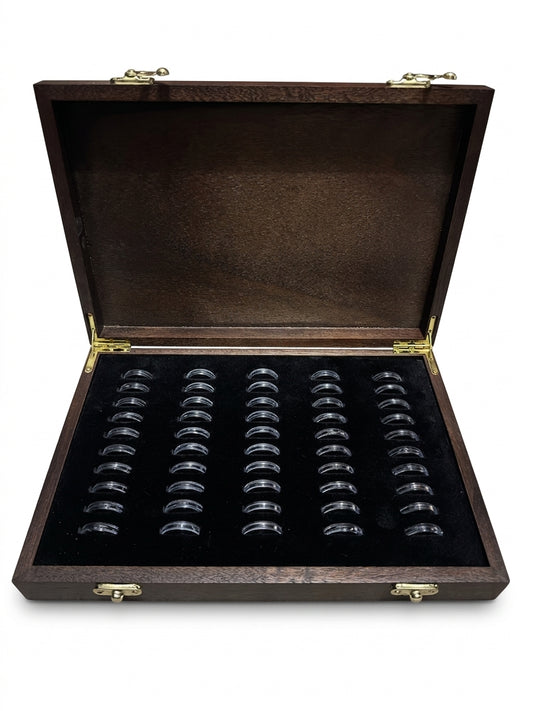
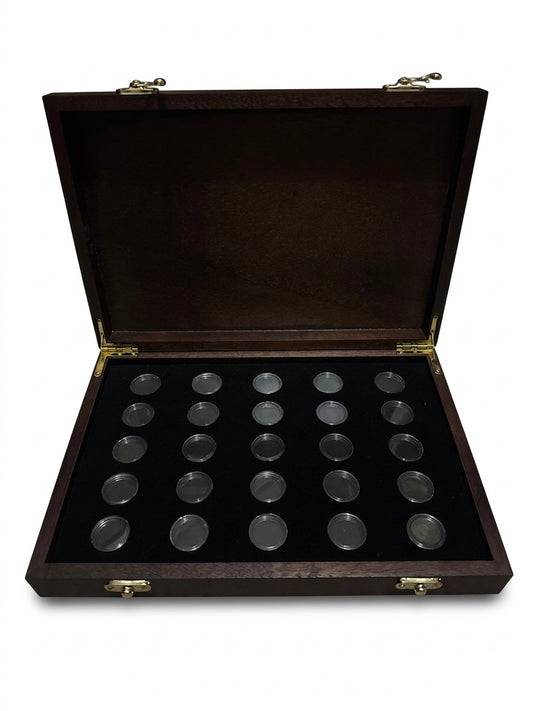
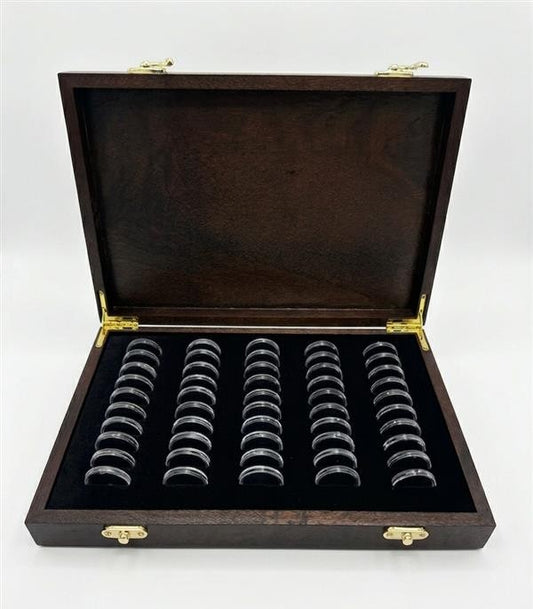
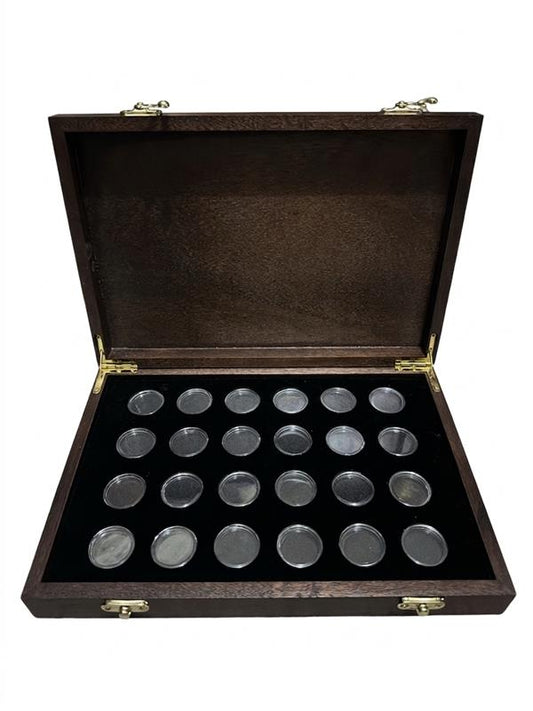
Handcrafted timber display cases purpose-built for the Australian decimal series — keeping every coin visible and every collection protected.
Browse The Collection