The First Case
On making something imperfect — and what it taught us about making something right
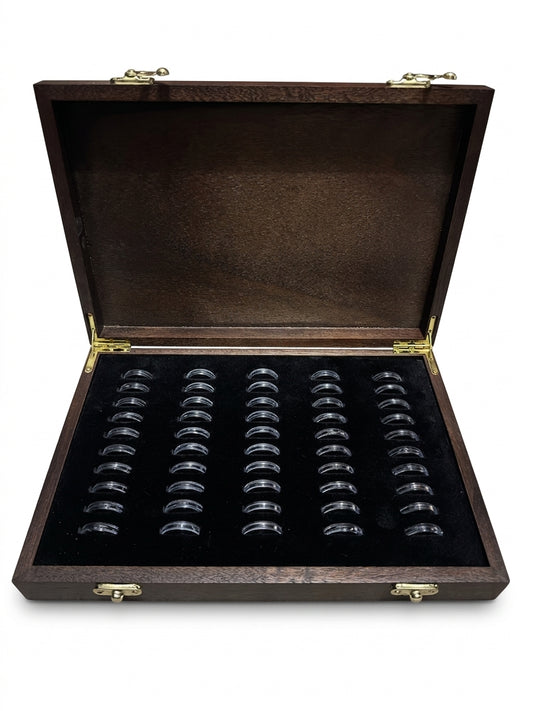
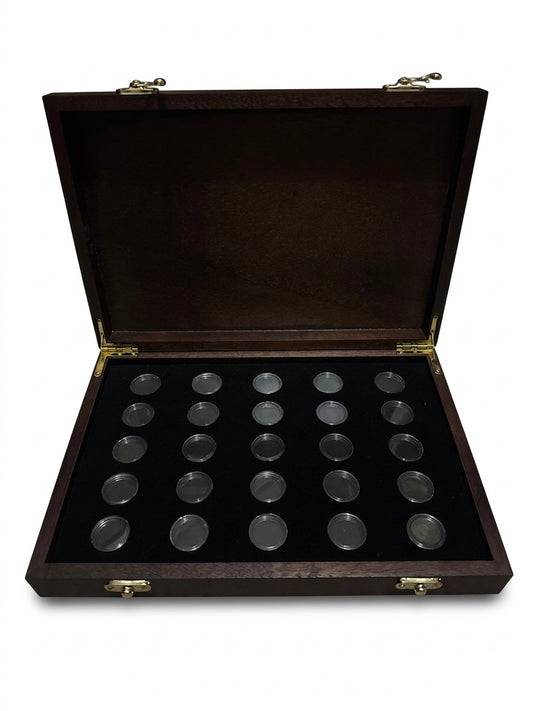
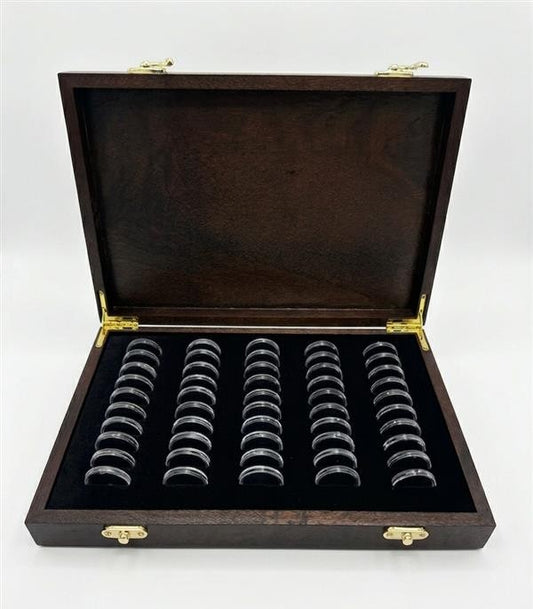
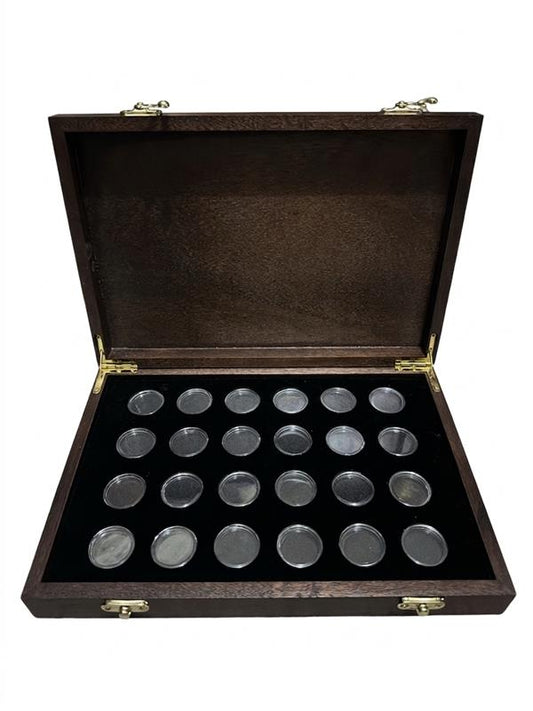
The first Thomas Anne case was not good enough. We knew it before it was finished. There was a moment — the finish going on, the grain doing something unexpected under the second coat — where it became clear that the case we were making was not yet the case we had set out to make. We finished it anyway, because you have to finish things to understand what they taught you.
We kept it. It sits in the workshop, not on display, not forgotten. It is the most useful object we own.
Where It Started
The idea for Thomas Anne came from a problem we recognised as collectors ourselves. We had coins worth protecting and nowhere to put them that felt worthy of what they were. Commercial display cases were generic — built for a broad market rather than for the Australian decimal series specifically. They were functional in the way that a filing cabinet is functional: they stored what was put in them without considering what that thing was.
We wanted something different. Something that understood what a decimal collection was — the denominations, the capsule sizes, the way certain coins need to be displayed flat while others are better stored vertically. Something made from a material that had the same permanence as the coins it was holding. Something that, when opened, communicated that the collection inside was being taken seriously.
So we made one. And it was not good enough.
What Was Wrong
The finish was uneven — not visibly, not in a way a buyer would notice, but in a way we noticed. The grain had pulled in a section near the hinge where the timber had been worked against its direction. The foam recesses were correct in diameter but slightly too shallow, so a coin seated in them sat proud rather than flush. The hardware was acceptable, not right.
None of these were catastrophic failures. The case would have done its job. But they accumulated into something that fell short of the standard we had set for ourselves — the standard that asks: would we keep our own collection in this?
The answer was no. And that answer is the most important quality control process we have ever put in place. It does not require documentation or metrics or review processes. It requires only honesty — and the willingness to start again when the honest answer is no.
"The first case taught us more than any of the cases that followed. You need to make the wrong thing before you can make the right one."
Bradley Thomas — Thomas Anne CollectiblesWhat It Taught Us
The first case taught us that preparation is not a stage before making — it is the making. The surface preparation that determines whether a finish goes on evenly, the timber selection that determines whether the grain behaves predictably under the tool, the hardware fitting that determines whether the mechanism will hold its precision over years of use. These are not preliminary steps. They are the work.
It also taught us that the standard we hold ourselves to has to be personal rather than commercial. A commercial standard asks: will this satisfy the customer? A personal standard asks: would we accept this ourselves? The second question is harder to answer dishonestly. You can rationalise a customer's expectations. You cannot rationalise your own.
Everything that has been right about Thomas Anne since has been a consequence of answering that second question honestly from the beginning. The first case made sure we understood what the question was.
Why We Kept It
The first case reminds us where we started and what it cost to get past it. Every case we make now is made against the memory of the one we made first. If you would like to understand how that process works today, the making of a Thomas Anne case is documented in full. That is the most useful thing it does — and the reason it sits in the workshop rather than in a drawer.
Handcrafted timber display cases built for the Australian decimal series — protecting your collection while keeping every coin visible.
Browse The Collection